
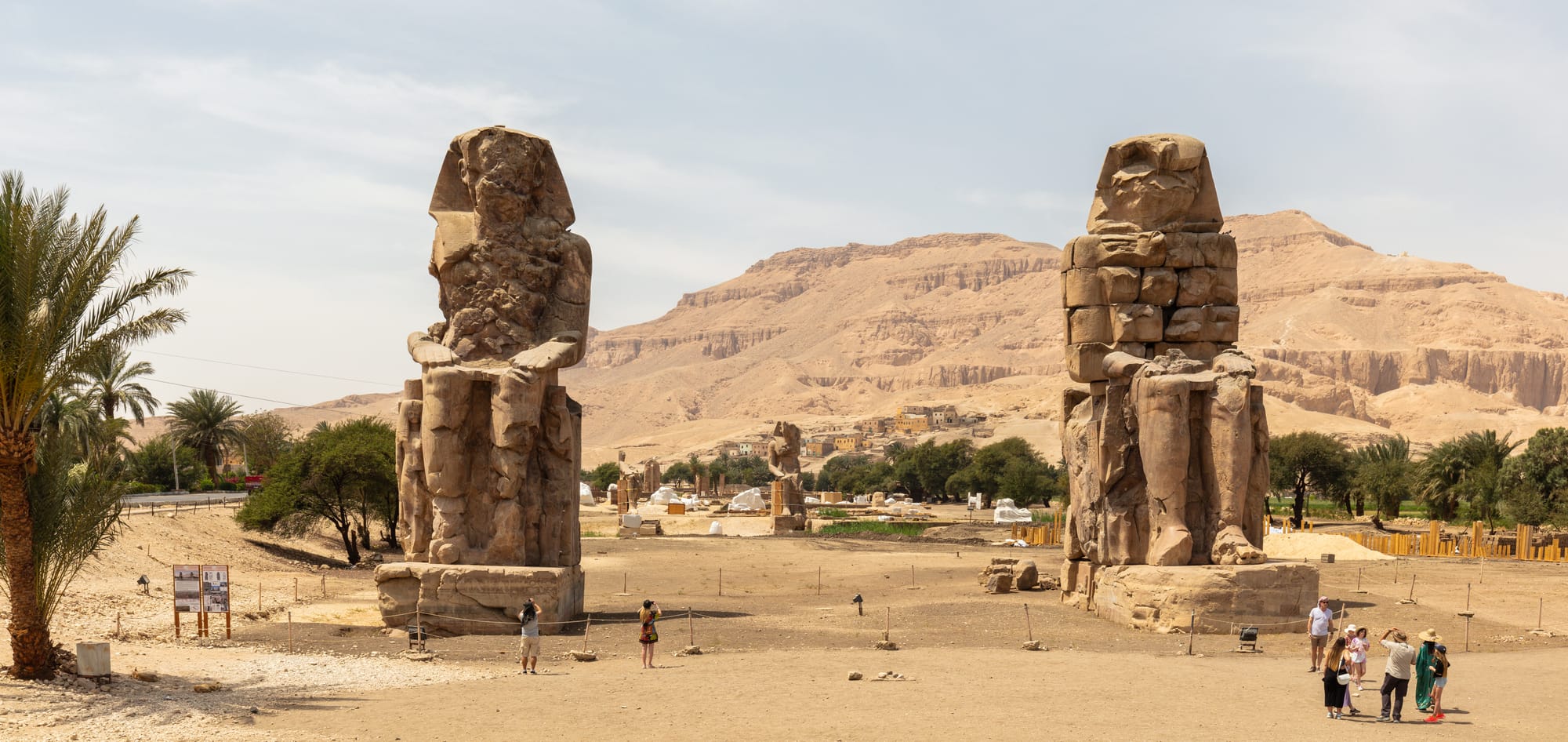
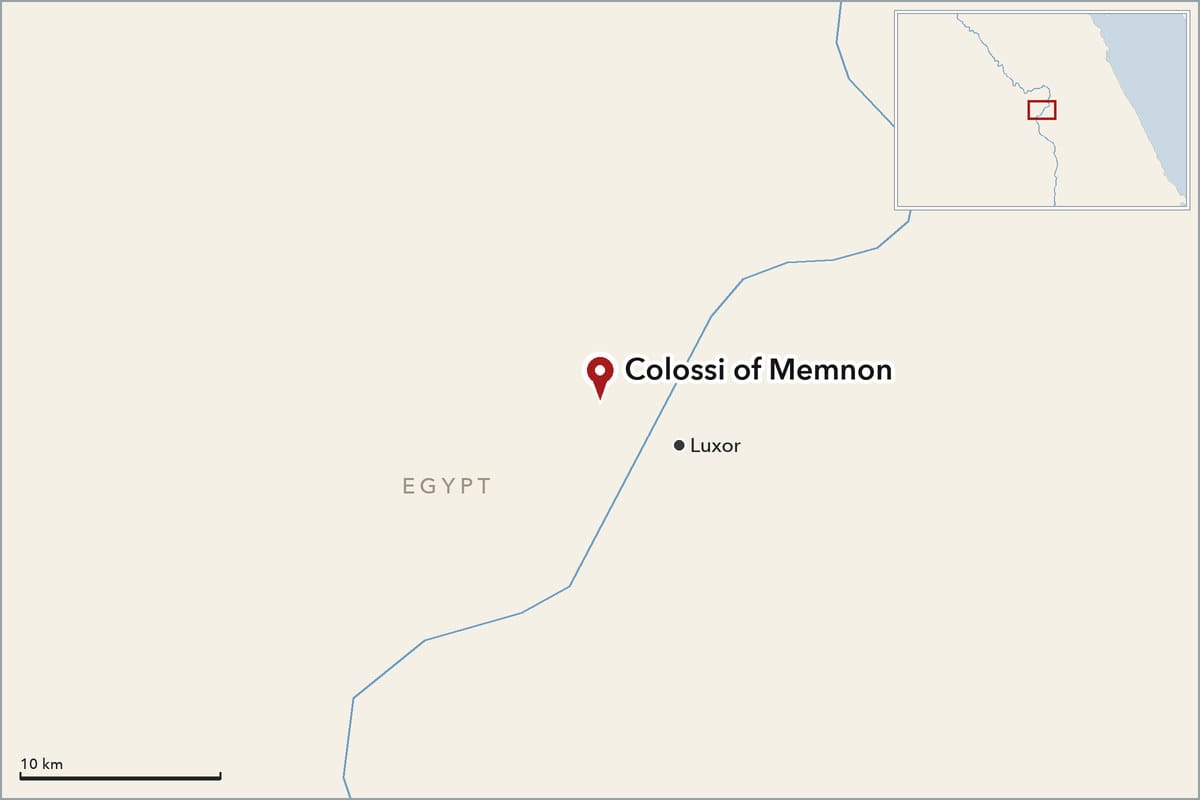
Behind the Colossi of Memnon, a project begun in 1998 under Egypt's antiquities ministry and the German Archaeological Institute has been working to preserve the remains of a temple and rebuild it. Egypt's Ministry of Tourism and Antiquities has published what the project's Egyptian-German mission found during what its statement calls the current season: parts of two large sphinxes of Amenhotep III, three busts of the goddess Sekhmet and fragments that change the picture of the temple's great hall.
The statement is attributed to Dr Mostafa Waziri, whom it names as Secretary-General of the Supreme Council of Antiquities. It says the work was done by the Egyptian-German mission led by Dr Hourig Sourouzian, during the current season, within the project to restore the Colossi of Memnon and Amenhotep III's mortuary temple on Luxor's western bank. The temple is known as the Temple of Millions of Years. The ministry's statement carries no date; Ad Hoc News reported that the announcement came on 22 October 2026.
The sphinxes
According to the statement, the sphinxes are of limestone and show the king in the nemes headcloth and royal beard, with a broad collar around the neck. Both were found in the area behind the Third Pylon gate. All the pieces of the two statues, Waziri said, have been carefully cleaned, strengthened and restored. That work showed an inscription on the chest area bearing Amenhotep III's royal name, which the statement renders as beloved of the god Amun-Ra.
Sourouzian said preliminary studies by the mission put the sphinxes at about 8 metres in length.
A road for festivals
Sourouzian said the two sphinxes confirm the beginning of a processional road between the temple's Third Pylon and its columned court. She said the Beautiful Valley festival was held there every year, along with the Heb-sed celebrations.
The statement lists a sandstone wall carrying scenes of the Heb-sed festival, and says the mission also found remains of walls and columns decorated with festival and ritual scenes.
Sekhmet, an official and a bigger hall
The mission also found three black-granite busts of Sekhmet, at the front of the open court and the great pillared hall. They are to be put together with other pieces found earlier at the site, ready to be displayed in their original places in the temple.
The statement adds a small black-granite statue of an official, seated, perhaps beside his wife. Studies indicate it probably dates to the post-Amarna period, when artists and scribes continued restoration work in the temple.
Column bases and stone blocks turned up in the southern half of the great pillared hall. The statement says this shows the hall was larger than known, with more columns. The pieces have been moved from where they were found in the temple to be restored and reassembled, and the original colours of many appeared, ahead of their return to their original places in the temple. My reading is that a hall whose size had to be revised after more than two decades of work is a reminder of how much of this temple is still to be recovered.
Why so little stands
The statement recalls that Amenhotep III built the temple on the western bank and that it was destroyed by a devastating earthquake in ancient Egyptian times. The restoration project began in 1998 under Egypt's antiquities ministry and the German Archaeological Institute, with the aim of preserving the temple's remains and rebuilding it. The mission had previously found many colossal statues of Sekhmet and of Amenhotep III and his wife, Queen Tiye.
Ad Hoc News noted that the announcement does not describe a completed exhibition or confirm public access to the new pieces, which are being conserved.
Sources
Ad Hoc News (2026) 'Memnon Colossi site yields new temple finds on 22 October', AD HOC NEWS, 31 October 2026, available at: https://www.ad-hoc-news.de/unterhaltung/reisen/memnon-colossi-site-yields-new-temple-finds-on-22-october/70437702 (Accessed: 31 October 2026).
Egyptian Ministry of Tourism and Antiquities (n.d.) 'اكتشافات أثرية جديدة بمشروع ترميم تمثالي ممنون ومعبد الملك أمنحتب الثالث' [New archaeological discoveries in the project to restore the Colossi of Memnon and the temple of King Amenhotep III], statement attributed to Dr Mostafa Waziri, named in it as Secretary-General of the Supreme Council of Antiquities, available at: https://egymonuments.gov.eg/ar/news/new-archaeological-discoveries-in-the-project-to-restore-the-colossi-of-memnon-and-the-temple-of-king-amenhotep-iii (Accessed: 31 October 2026).
Picture credits
- Top picture: The Colossi of Memnon on Luxor's western bank. Image: Colossi of Memnon, Luxor — Diego Delso, CC BY-SA 4.0 (Wikimedia Commons)
- Map: drawn from Natural Earth (public domain) and Wikidata.
