
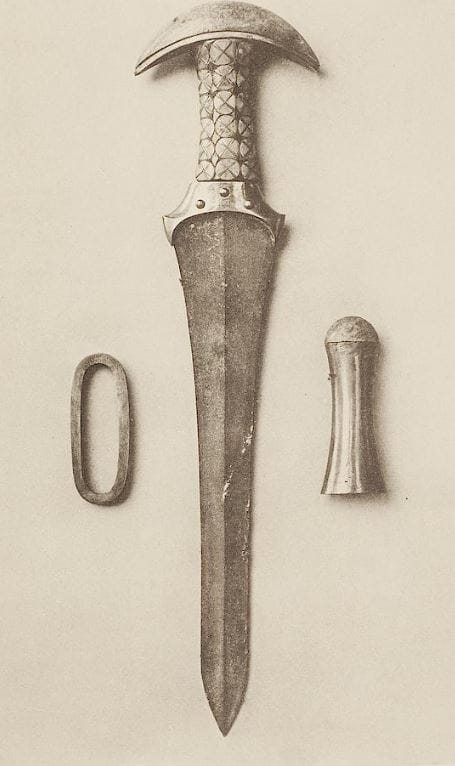
Bows, arrows, maces and a dagger were buried with royal women at Dahshur, south of Cairo, according to The National. Frontiers' news desk says scientists have disputed for decades whether such weapons were symbolic or practical. A study published on 17 July 2026 in Frontiers in Environmental Archaeology argues that the women's own skeletons answer the question.
The lead author, Zeinab Hashesh of Beni-Suef University, put it this way to Frontiers: "Members of the royal family, especially the women, were active participants in skilled, physically demanding activities such as archery and hunting."
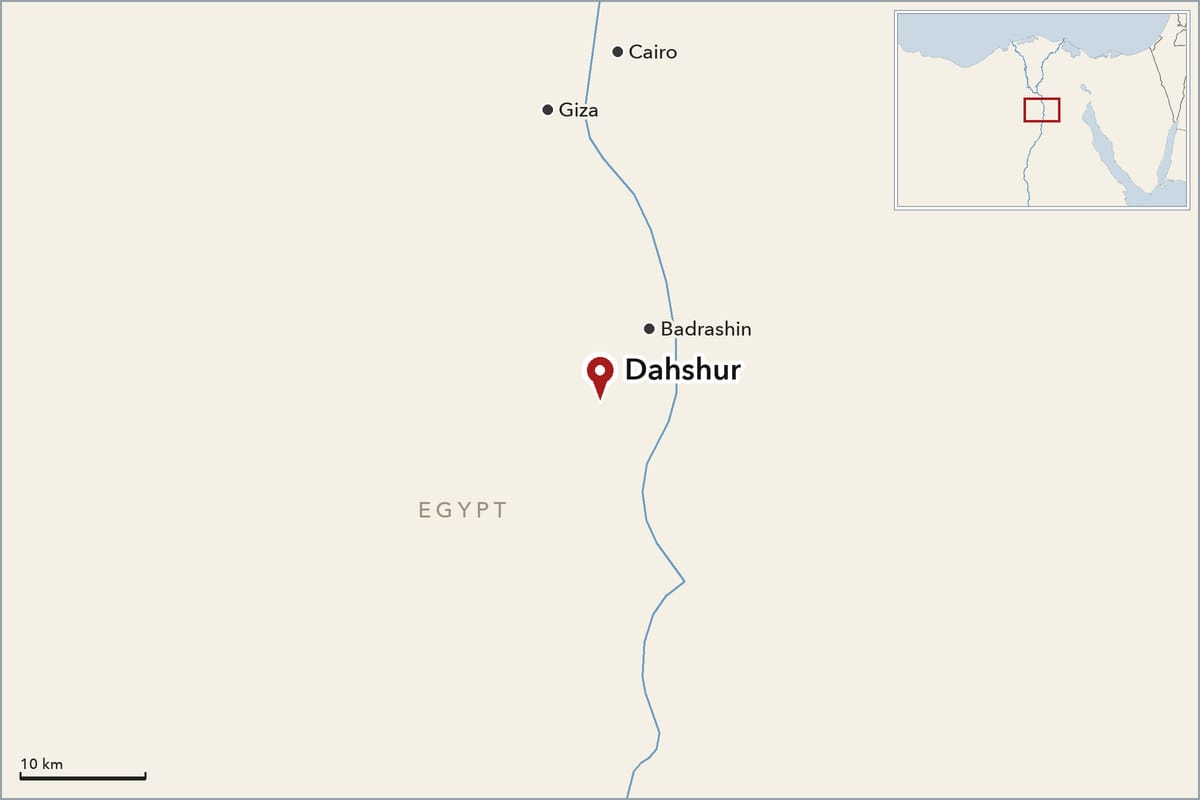
Remains that went unexamined
The study covers six individuals: King Hor and five women, Princesses Noub-Hotep, Ita, Khenmet, Itaweret and an anonymous female. According to the paper, they were recovered from around the pyramid complexes of Amenemhat II and Amenemhat III during Jacques de Morgan's excavations of 1894 and 1895.
The paper says Dr. Daniel Marie Fouquet examined only King Hor and Noub-Hotep in 1895. The others were not examined anthropologically by him and, in the authors' words, "went unexamined for more than a century". The remains reached the Egyptian Museum in Tahrir in 1915, brought by Madame Fouquet after Fouquet's death in Cairo in 1914. They were rediscovered in the museum's basement and re-examined in 2020 during a curation project directed by Hashesh. The paper notes that many bones still carry the excavators' handwritten identifications, and The National reports that some were wrapped in the yellowed 1890s newspaper used to pack them.
The evidence was also incomplete by then. According to the paper, the skulls were sent to the Anatomical Museum of the Cairo School of Medicine, documented there by Elliot Smith and later lost. Only King Hor's skull survives, and it has no upper or lower jaw.
What the researchers say the bones show
The team combined bone measurements and X-rays with chemical analysis of embalming resins. The paper records markedly robust upper-limb muscle and ligament attachments, and Frontiers says these are consistent with training for archery.
- Ita. The paper puts her at 28 to 34 at death. Hashesh told Frontiers she had "strong upper-body muscle attachments, suggesting she habitually used weapons like maces or daggers".
- Noub-Hotep. The National reports that one of her palm bones is slightly bowed from the strain, a detail it links to the arrows found in her tomb.
- Khenmet and Itaweret. Hashesh told Frontiers that Khenmet had "very robust ligament attachments" and that Itaweret's "skeleton shows she was a skilled archer". Science News reports that enlarged areas of Itaweret's forearm bones indicated she had often drawn bows.
- King Hor. Frontiers says similar evidence indicates he was also an archer.
Hashesh put the conclusion directly to Frontiers: the weapons "were not just symbolic gifts but tools they actively used".
Hashesh told Science News that some Egyptologists have dismissed armaments in female graves as "token" objects for the afterlife. Hashesh told The National: "Our findings prove that in the elite sphere of the Middle Kingdom, high social status could effectively redefine what it meant to be a woman."
Injuries, strain and care
Itaweret had well-healed fractures of two left ribs and stress fractures in three left foot bones, according to the paper. Frontiers says the rib injuries were probably caused by a blow or a fall from a height. Hashesh told Frontiers the injuries were most likely caused by accidents, falls, hard blows or other impacts linked to an active lifestyle.
The skeletons also record hardship. The National reports signs of childhood metabolic stress in the group. For Khenmet the paper reports thinning of the long bones that "may be indicative of osteoporosis", though the authors say further diagnostic analysis is needed. The National reports that every fracture the team examined had healed cleanly, with no bones left crooked. Hashesh told Frontiers that the injuries healing well "suggests they had access to advanced medical care for their time".
Frontiers also reports that four of the six were sisters, daughters of the pharaoh Amenemhat II: Ita, Khenmet, Itaweret and the anonymous woman, provisionally identified as Princess Sathathormeryt. The sisters shared rare spinal abnormalities, which the researchers take to mean their parents and wider family were closely related.
What is still open
Egyptologist Nicholas Brown of the University of Iowa in Iowa City, who was not involved in the study, told Science News that princesses used bows in the royal ritual of shooting arrows in the four cardinal directions at the Sed festival of renewal. He called the evidence for their weapon use indirect: "The bones aren't preserving the behavior directly, but the muscle attachments are clearly indicating some kind of habitual, repeated activity."
The authors also set out their own limits. Frontiers says the researchers point out that the loss of the skulls limits their analyses. One skeleton has no label. The paper labels it Individual 408, "probably Sathathormeryt", and Science News describes the identification as tentative.
Frontiers says the team has not yet carried out all the analyses it intends, such as stable isotope analysis, and Science News reports that it hopes to carry out DNA studies.
My reading: the strongest part of the case is the match between particular bones and particular objects, such as Noub-Hotep's bowed palm bone and her arrows, though the paper notes that bowing of Khenmet's second metacarpals is "commonly associated with metabolic disturbances such as vitamin D deficiency". The weakest is the step from habitual use to hunting, battle or ritual, which the bones alone do not obviously settle. Brown's point that the evidence is indirect fits that gap.
Sources
Frontiers (2026) 'Ancient Egyptian princesses born 4,000 years ago were skilled archers, new study shows', Frontiers, 17 July 2026, available at: https://www.frontiersin.org/news/2026/07/17/ancient-egyptian-princesses-4-000-years-ago-skilled-archers-frontiers-environmental-archaeology (Accessed: 18 October 2026).
Hashesh, Z., Gabr, A. and Walker, R. (2026) 'Bioarchaeological reassessment of Dahshur royal skeletal remains from the Late Middle Kingdom (c. 1850–1700 BCE)', Frontiers in Environmental Archaeology, 5, 17 July 2026, doi: 10.3389/fearc.2026.1844402, available at: https://www.frontiersin.org/journals/environmental-archaeology/articles/10.3389/fearc.2026.1844402/full (Accessed: 18 October 2026).
Metcalfe, T. (2026) 'Ancient Egyptian princesses knew their way around weapons of war', Science News, 17 July 2026, available at: https://www.sciencenews.org/article/ancient-egyptian-princesses-weapons-war (Accessed: 18 October 2026).
The National (2026) 'Egypt's warrior princesses: Ancient bones reveal lives of trained female archers', The National, 17 July 2026, available at: https://www.thenationalnews.com/news/mena/2026/07/17/egypts-warrior-princesses-ancient-bones-reveal-lives-of-trained-female-archers/ (Accessed: 18 October 2026).
Picture credits
- Top picture: The dagger buried with Princess Ita, in a plate from Jacques de Morgan's Dahshur excavation. Image: de Morgan, Fouilles à Dahchour 1894-1895, Vol. II, pl. VI, 1903; public domain, via Wikimedia Commons
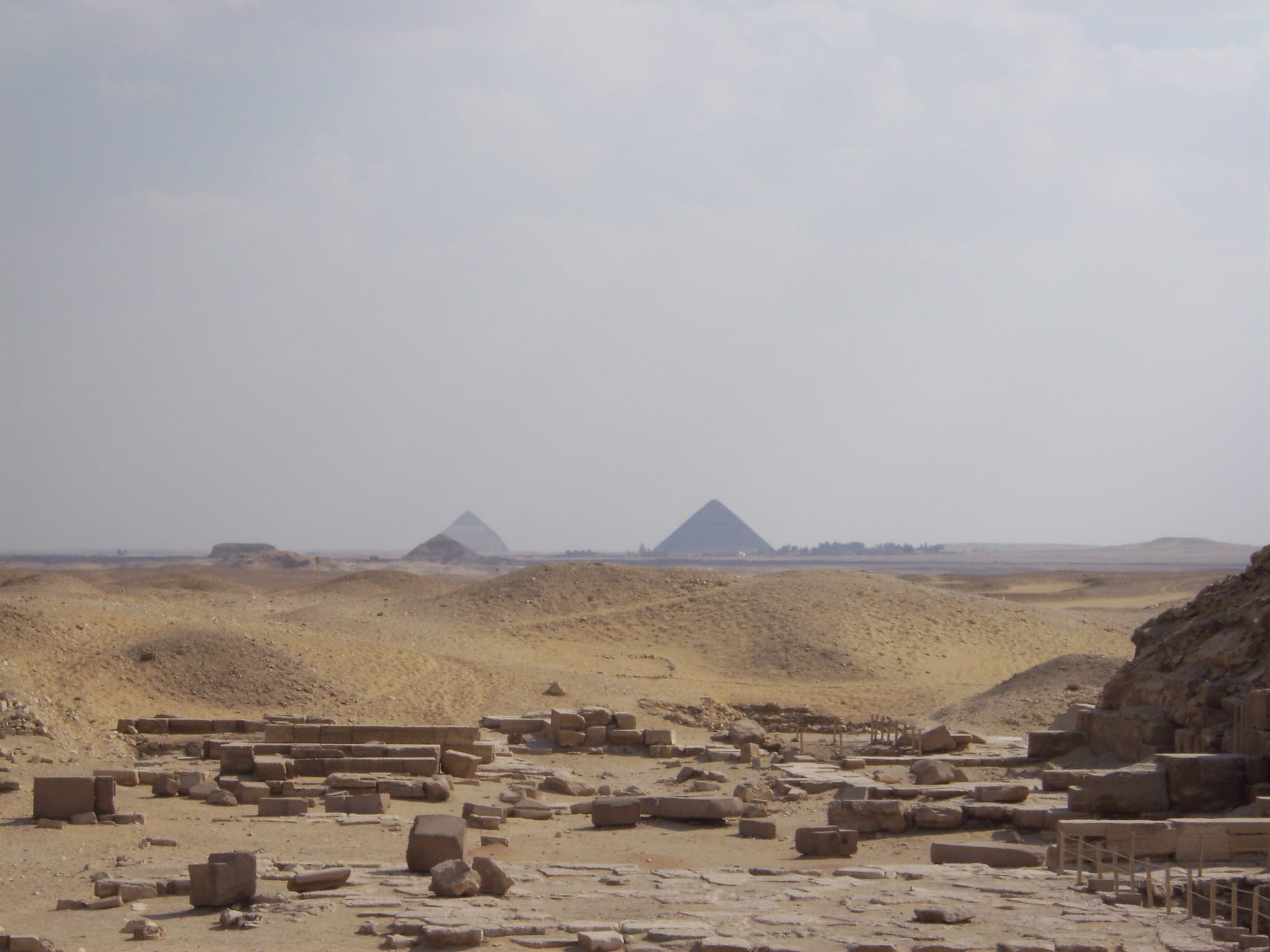
- The Dahshur necropolis, in a file photograph of the site. It does not show the burials in the study. Image: Bent Pyramid and Red Pyramid, Dahshur — Ocean Star, CC BY 3.0 (via Wikimedia Commons)
- Map: drawn from Natural Earth (public domain) and Wikidata.

