
A small bronze in a museum in western Türkiye is being read as evidence of how an Egyptian god changed when he left Egypt. The figure is Harpocrates, the child form of Horus. A study published in the journal Cedrus examines how his image took on a mixed character in Roman Anatolia.
What the study looked at
The study is by Esma İvrendi Şenol, titled "A Harpocrates Figurine in the Hierapolis Collection: The Iconographic Reflection of Cultural Syncretism". It appears in Cedrus, volume 14, pages 349–361. The Zenodo record gives its dates as submitted 29 April 2026, accepted 4 September 2026 and available 12 October 2026. Arkeonews, which reported on the study on 22 October 2026, describes İvrendi Şenol as an archaeologist at Pamukkale University.
The object is a bronze figurine already housed in the Hierapolis Archaeology Museum. Arkeonews notes that it belongs to an existing museum collection rather than a newly excavated archaeological context. According to the abstract on the Zenodo record, the author analysed it using typological and iconographic approaches, supported by comparative material, stylistic assessment and detailed visual examination.
An Egyptian child with a Greek body
The abstract points to several features on the figurine. One is the gesture of a finger placed to the mouth, which it describes as symbolising silence. Another is the cornucopia held in the other hand. Together, the abstract says, they reflect a hybrid representation associated with fertility and mystery cults of the Greco-Roman world.
The abstract also splits the figure's influences. The "pschent-like headdress", it says, preserves Egyptian tradition, while the modelling of the body and the compositional stance show clear influences of Greek sculpture. Arkeonews renders the headdress as one reminiscent of the Egyptian double crown. Stylistic analysis, according to the abstract, suggests a date in the 1st–3rd centuries CE, during the Roman Imperial Period.
How a gesture changed meaning
Arkeonews gives the background. Harpocrates began in Egyptian religion as Hor-pa-khered, meaning "Horus the Child", and Horus was the son of Isis and Osiris. In Arkeonews's account, Egyptian artists commonly showed the young god with a finger near his mouth, a gesture linked with childhood in Egyptian visual conventions. Greek communities, it says, interpreted the same gesture differently, connecting Harpocrates with silence, secrecy and the protection of sacred knowledge.
Arkeonews adds that Harpocrates stayed closely associated with Isis, and that the goddess and her child, together with deities such as Serapis, became familiar figures far beyond Egypt.
What a figurine like this may have been for
The abstract concludes that "such portable figurines may have served functions related to individual piety, apotropaic protection, and the dissemination of the Isis cults in and around the Lykos Valley". The wording is cautious: "may have". The abstract offers no stronger claim about this particular object's use.
The setting: Hierapolis
Arkeonews places ancient Hierapolis near modern Denizli in southwestern Türkiye. It says the city was founded under the Attalid rulers of Pergamon in the late second century BC and that its principal deity was Apollo. It also describes the Ploutonion, which ancient worshippers regarded as an entrance to the underworld, and says modern research has identified exceptionally high concentrations of carbon dioxide at the site.
Arkeonews presents this as the religious environment in which Egyptian, Greek and Roman traditions circulated through Anatolia. The study itself, per its abstract, evaluates the figurine's significance within the cultural and religious environment of Roman Anatolia.
Our view
Nothing here overturns anything, and we won't pretend it does. It is a single small bronze, read carefully. But that is its value: an Egyptian-style headdress and a Greek-influenced body sit on one object, and the pose that meant childhood in Egypt was read as silence by Greek eyes. Egyptian religion did not simply travel abroad unchanged. Those who took it up reshaped it, and a small portable figure like this one shows it.
Sources
Altuntaş, L. (2026) 'Ancient Figurine of Child Horus Shows How Egyptian and Greco-Roman Beliefs Merged in Anatolia', Arkeonews, 22 October 2026, available at: https://arkeonews.net/ancient-figurine-of-child-horus-shows-how-egyptian-and-greco-roman-beliefs-merged-in-anatolia/ (Accessed: 22 October 2026).
İvrendi Şenol, E. (2026) 'A Harpocrates Figurine in the Hierapolis Collection: The Iconographic Reflection of Cultural Syncretism', Cedrus, 14, pp. 349–361, Zenodo, 12 October 2026, DOI: 10.5281/zenodo.22928944, available at: https://zenodo.org/records/22928944 (Accessed: 22 October 2026).
Picture credits
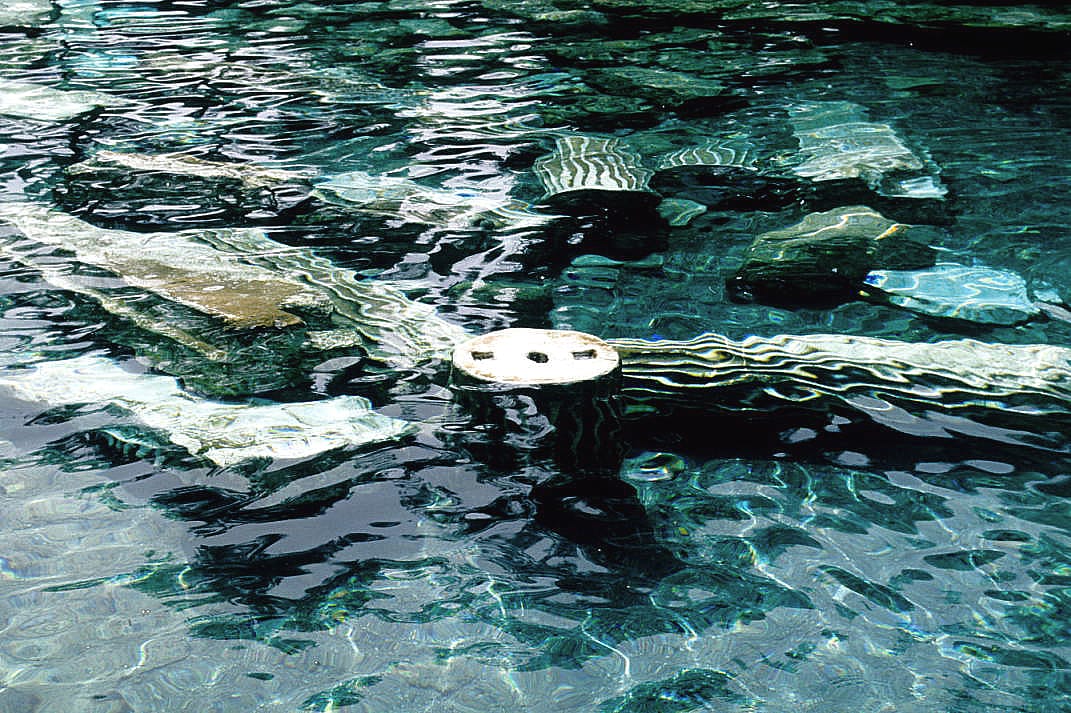
- Top picture: The ruins of ancient Hierapolis, near modern Denizli. Image: Ruins of Hierapolis, Denizli, Türkiye — LBM1948, via Wikimedia Commons (CC BY-SA 4.0)
