
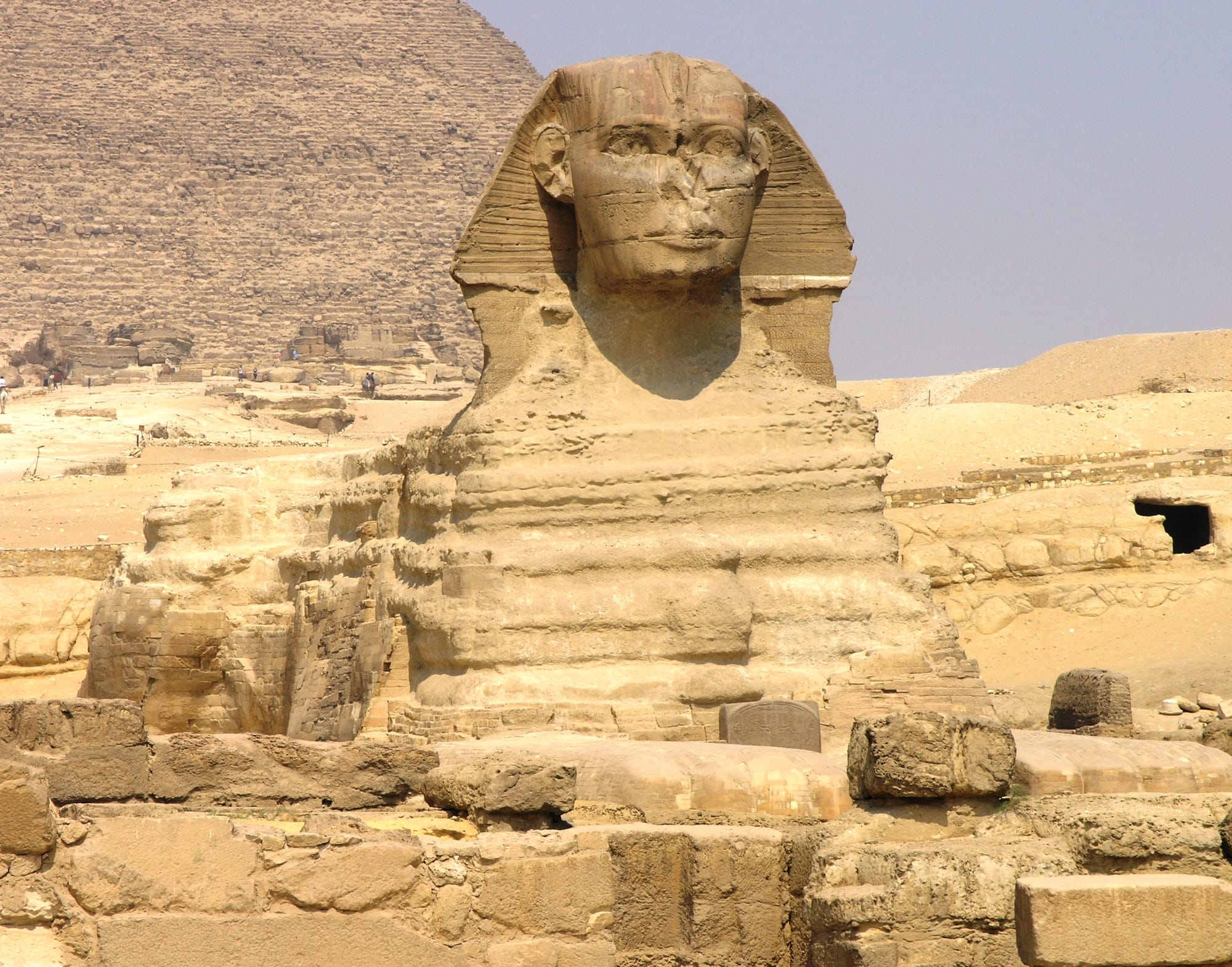
A fossil crocodile pulled from Egyptian rock in the 1920s has been given a new name, and the reason has to do with the Great Sphinx's most famous flaw. The animal is Herugavialis cairensis. Researchers say it came from the same rocks used to build the monument, and that, like the Sphinx, it is missing the tip of its nose.
The Swedish Museum of Natural History, whose researcher led the work, announced the find. The details are published in Royal Society Open Science.
An old fossil, looked at again
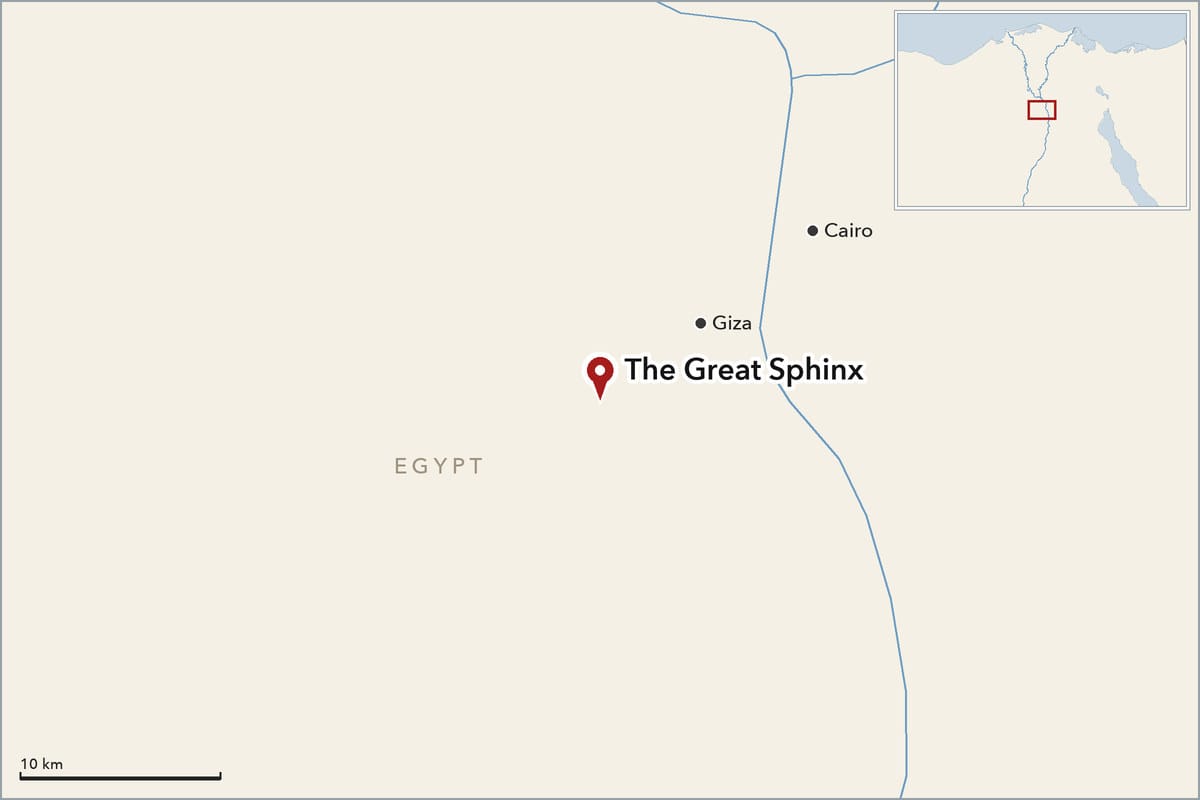
According to the museum's release, several fossils were recovered in the 1920s from the 45-million-year-old Mokattam Formation in Egypt. They included a nearly complete skull. The fossils were described at the time as belonging to Tomistoma, because of a superficial resemblance to the false gharial.
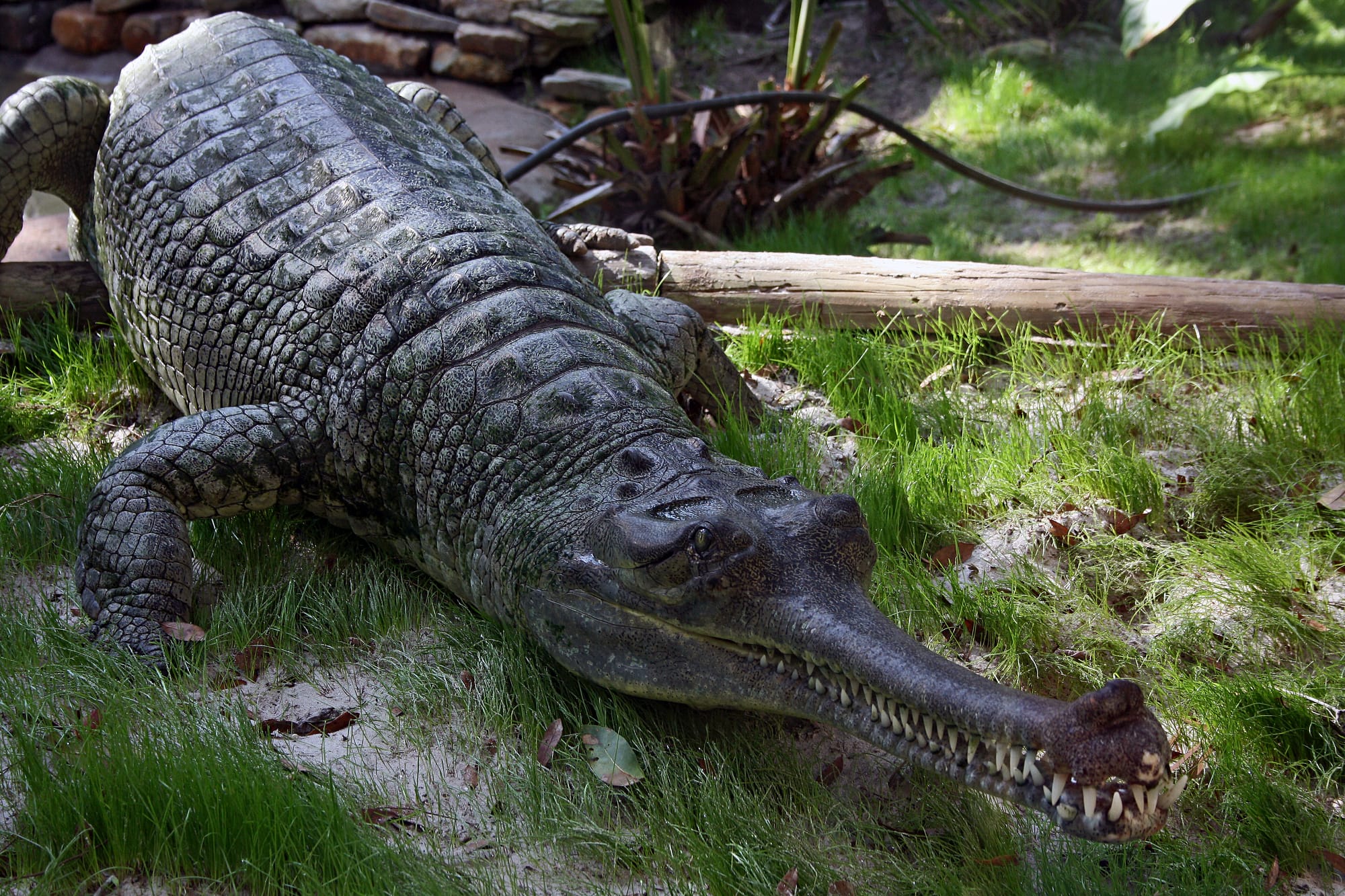
The false gharial (Tomistoma schlegelii) is one of only two living gavials, the group of crocodiles with long, thin snouts. The other is the Indian gharial, Gavialis gangeticus. Both now live only in freshwater on the Indian subcontinent and in Southeast Asia, but the fossil record shows gavials across a near-global range for more than 100 million years, many in shallow marine settings.
The museum says a team from the UK, Sweden, Germany and Egypt, led by Dr Paul Burke of the Swedish Museum of Natural History in Stockholm, took another look using techniques that weren't available in the 1920s. CT scanning let them look inside the skull, and they found several differences between the false gharial and the Mokattam fossils.
Sci.News adds detail from the study. The species was first described in 1927 as Tomistoma cairense, and is known from several specimens, including the fairly complete holotype skull SMNS 10575. The team compared the skull with other gavialoids and ran an evolutionary analysis covering 152 species and 331 anatomical characters. The result put the fossil among the gavialoids but not near the false gharial. Sci.News describes it as an early-branching member of the gavialine lineage, outside the group containing the living Indian gharial and its relatives. Its snout is long and narrow, making up about 64% of the skull's length.
Why "Heru"
The skull is relatively well preserved, but the tip of the snout is missing. That is what led to the name. Professor Philip Mannion of University College London, who co-led the study, said in the release:
"Given this coincidence with the famously missing nose of the Great Sphinx, we decided to name the new crocodile after the Egyptian god Heru, who was possibly the inspiration for this iconic monument."
Note the hedge: Mannion says the god "was possibly" the monument's inspiration. The name is a nod to a coincidence between a fossil and a statue, not a claim about how the Sphinx was conceived. As a naming story it works. A fossil crocodile from the same rock formation the Sphinx was carved from, missing the tip of its own snout, is a tidy detail.
A busy Mediterranean
Herugavialis was not alone. The release says the shallow seas that covered much of the region were also home to at least two other gavial species.
Burke put the wider picture this way: "Throughout much of the last 50 million years, the Mediterranean region hosted a high diversity of crocodiles, including gavials." He said that diversity fluctuated over time, seemingly corresponding to changes in global temperature and sea level. He said all crocodiles in the region were lost as a result of the drying of the Mediterranean approximately 6 million years ago.
Sci.News reports that at least six gavialoid species are known from the Mediterranean region in the Paleogene and at least six more in the Miocene, with none known from the Oligocene in between. It also says Mediterranean gavialoids appear to have declined in the Late Miocene and disappeared before the Pliocene, with the Messinian salinity crisis a possible driver of their extirpation.
Mongabay notes that the Nile crocodile is the only crocodile species found in Egypt today.
What it means for the Sphinx
The find is a paleontology result: a century-old museum specimen reclassified with modern scanning. The Sphinx connection is the hook. The scientific point is that a skull long filed under the false gharial belongs to a different animal, one that, in the words of the paper's title, provides new insights into gavialoid diversity in the Mediterranean region.
Sources
Burke, P.M.J. et al. (2026) 'Cranial anatomy of the Middle Eocene Egyptian crocodylian Herugavialis cairensis provides new insights into gavialoid diversity in the Mediterranean region', Royal Society Open Science, 13(10): 261173, doi: 10.1098/rsos.261173 (Accessed: 11 October 2026).
Kimbrough, L. (2026) 'New crocodile species found fossilized in stone used to build Egypt's Great Sphinx', Mongabay, 6 October 2026, available at: https://news.mongabay.com/2026/10/new-crocodile-species-found-fossilized-in-stone-used-to-build-egypts-great-sphinx/ (Accessed: 11 October 2026).
Sci.News (2026) '45-Million-Year-Old Crocodile Skull from Egypt Gets New Name: Herugavialis cairensis', Sci.News, 7 October 2026, available at: https://www.sci.news/paleontology/herugavialis-cairensis-15114.html (Accessed: 11 October 2026).
Swedish Museum of Natural History (2026) 'New crocodile species discovered in rocks used to build the Great Sphinx', reprinted by Geology Page, 7 October 2026, available at: https://www.geologypage.com/2026/10/new-crocodile-species-discovered-in-rocks-used-to-build-the-great-sphinx.html (Accessed: 11 October 2026).
Picture credits
- Top picture: The Great Sphinx of Giza. Image: Great Sphinx of Giza, front view — Daniel Mayer, CC BY-SA 4.0 (Wikimedia Commons)
- An Indian gharial. Indian gharial (Gavialis gangeticus), photo by Jonathan Zander, CC BY-SA 3.0 (via Wikimedia Commons)
- Map: drawn from Natural Earth (public domain) and Wikidata.
