
A tomb shaft that the American archaeologist George Reisner gave up on in 1915 produced what KU Leuven describes as the oldest published copy of an Egyptian funerary composition called the Book of Two Ways. A KU Leuven team reopened the shaft in 2012, and Curiosmos reports that the study of the coffin was first published online in 2019. The wood carrying it was so decayed that, in the university's words, it almost crumbled to powder on touch. Researchers, the excavator among them, also question whether the text was ever a map for the dead.
A shaft abandoned, then reopened
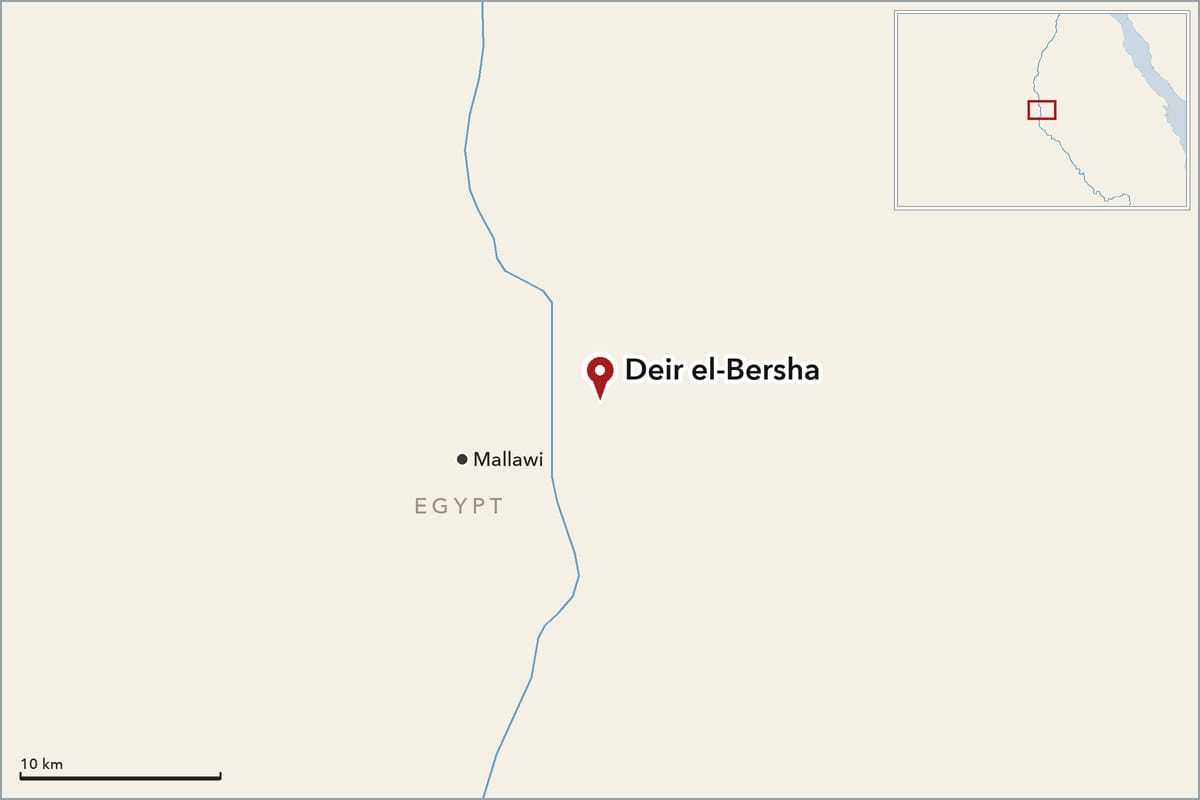
According to KU Leuven's press release, Reisner found the tomb shaft at Dayr al-Barsha, in Middle Egypt, in 1915. He stopped excavating when the fill turned out to be contaminated with modern waste. The release says the conclusion that robbers had recently entered the tomb was inevitable, and that the excavation stopped.
Harco Willems and his KU Leuven team reopened the shaft to document whatever remained. They found that parts of the collapsed funerary equipment still stood in their original position. The release says the robbers probably had not noticed this because the wood was so badly decayed that it was completely fragmented.
What the conservators found
Many years of conservation and documentation followed. They showed that the coffin bottom was inscribed with a Book of Two Ways, of which a small part survives. KU Leuven dates the source to the early Middle Kingdom, about 2040 BC. It belonged to a woman called Ankh, a relative of a provincial governor named Ahanakht.
KU Leuven says that no new coffins with the Book have come up in excavations since 1915, and that this one is the oldest as yet published. In its reading, that shows the Book of Two Ways existed right from the start of the Middle Kingdom. In a separate KU Leuven news item, which credits New Scientist as its source, Willems is reported as saying that, going by inscriptions found nearby, the team presumes the copy to be about forty years older than any other known copy. "To my amazement it was a Book of Two Ways," he told New Scientist, as that item reports.
Curiosmos reports that the coffin is designated B4B and that the fragment retains parts of Coffin Text spells 1128 and 1130.
What the Book of Two Ways is
KU Leuven says Books of Two Ways are attested only on coffins from Dayr al-Barsha. The name, it says, is "an invention by modern scholars", taken from a depiction of two curved lines often read as two roads through the netherworld. The Book is the largest composition of its kind and fills the whole coffin bottom. It holds more than maps: the release lists demons, gates and ships, alongside what it calls "extremely obscure texts."
Map, manual or ritual?
The release says Egyptologists have often explained the Book as a kind of manual the deceased could read and use to travel through the netherworld and get past its monsters.
KU Leuven adds that some scholars, the excavator among them, have recently put forward evidence that points elsewhere. On that view the Book was a collection of texts and drawings about the world of the gods, which priests could use in temple cult. The more comprehensible parts concern a person claiming to take part in acts aimed at bringing the dead god Osiris back to life, and protecting his corpse from his brother and enemy Seth. KU Leuven says such texts were probably used in the cult in Osiris temples.
Willems himself is careful. In the news item he says the Book "definitely looks like a map", but that it is hard to tell whether the ancient Egyptians meant it to be seen and read that way. "It would be nice if we had much clearer explanatory texts about what is going on in the Book of Two Ways," he says. "Unfortunately, what we have is not very helpful." He links the Book to the Osiris cult, describing that cult as being about bringing the god back to life through ritual. The news item adds that the Egyptians might later have decided to copy descriptions of those rituals onto the coffins of their dead.
My view: "map of the underworld" is a tidy label, but the person who dug the coffin up does not treat it as settled. A tidy label is only as good as the evidence behind it, and Willems says the explanatory texts we have are not very helpful.
Why a woman is called "he"
Ankh was a woman, yet the Book refers to her in masculine terms. Willems notes that the whole idea of surviving in the netherworld is expressed in male terms; the news item explains this is probably because the writings were copied from a master version with the male god Osiris as its protagonist. "It can become really confusing to decide whether the coffin contained a man or a woman," he says.
KU Leuven's press release offers a reading of what that meant for Ankh. Rich dead people were brought back to life by complex rituals that turned them into "an" Osiris, so the same rituals may have been used for her. The bottom of her coffin gave her a manual that could serve eternally to do so. The release adds that the ritual texts transformed her into a male deity, a consequence she shared with many dead women.
Sources
Curiosmos (Petricevic, I.) (2026) 'Ankh's Crumbling Coffin Preserved an Early Egyptian Guide to the Afterlife', Curiosmos, 26 October 2026, available at: https://curiosmos.com/ankh-coffin-book-of-two-ways/ (Accessed: 26 October 2026).
KU Leuven Faculty of Arts (n.d.) 'Harco Willems discovered oldest copy of The Book of Two Ways' (the item credits New Scientist as its source), KU Leuven, available at: https://www.arts.kuleuven.be/english/news/harco-willems-discovered-oldest-copy-of-the-book-of-two-ways (Accessed: 26 October 2026).
KU Leuven Faculty of Arts (n.d.) 'Press release: Egyptologists from KU Leuven discover an early 'Book of Two Ways'', KU Leuven, available at: https://www.arts.kuleuven.be/dayr-al-barsha/Press-release-early-Book-of-Two-Ways (Accessed: 26 October 2026).
Picture credits
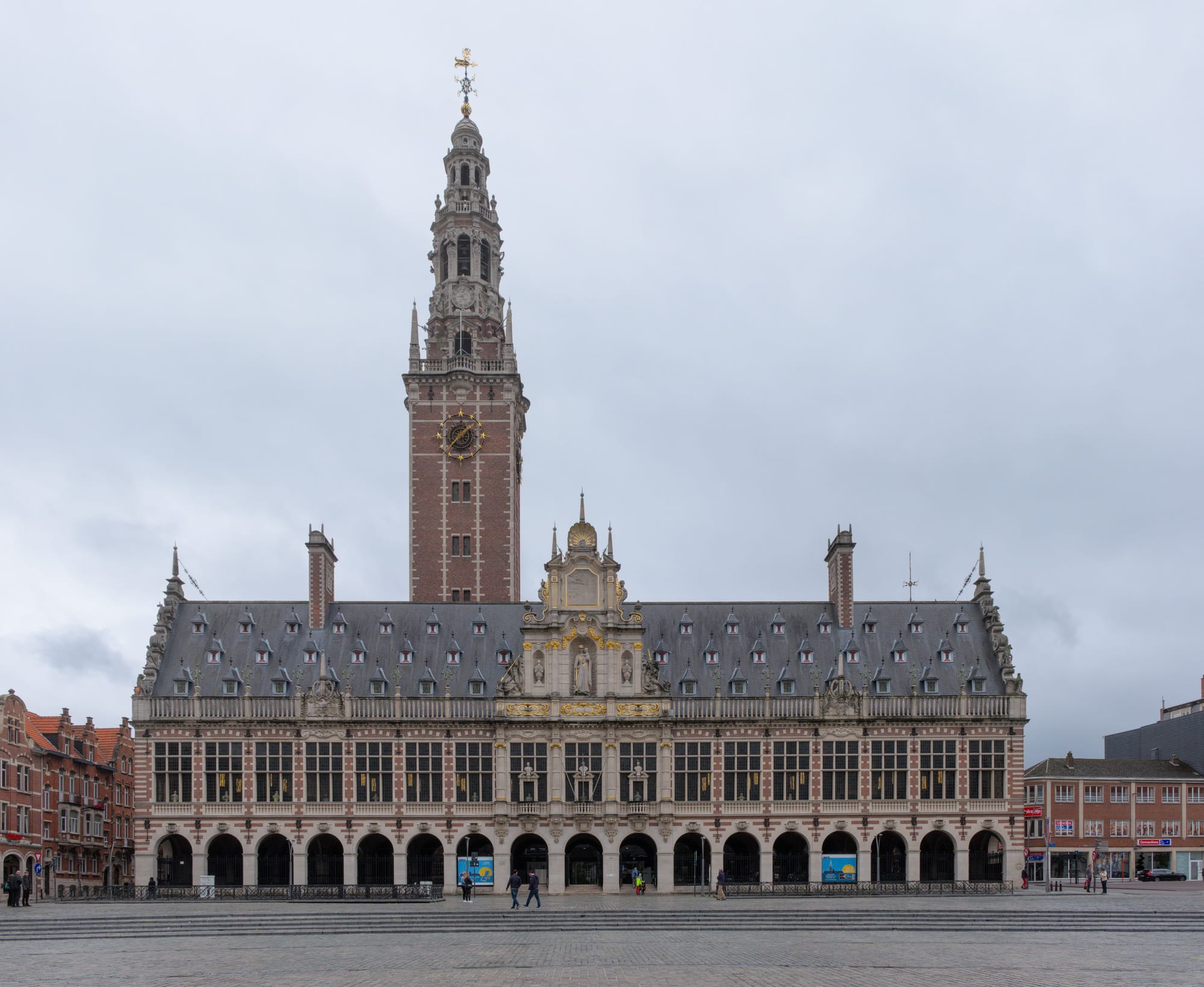
- Top picture: Central library of the Catholic University of Leuven (KU Leuven Libraries). Photo: Trougnouf, CC BY 4.0 (source)
- Map: drawn from Natural Earth (public domain) and Wikidata.
