
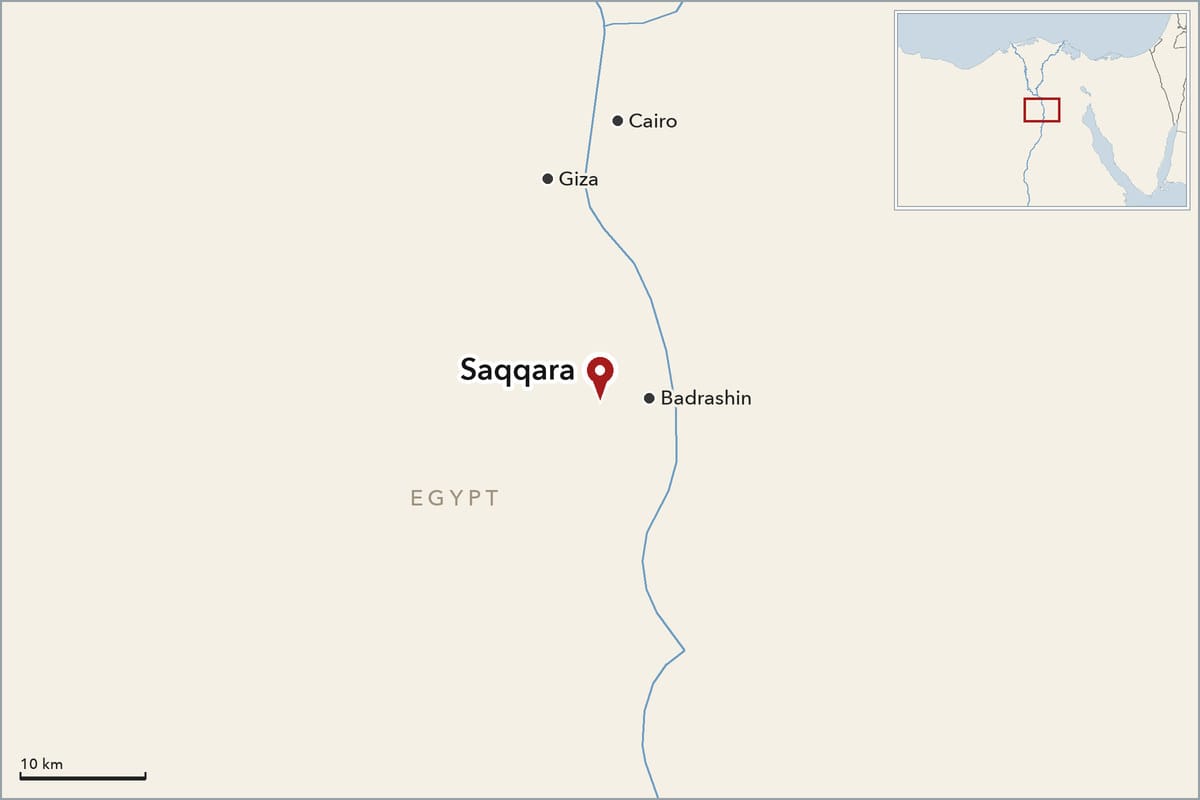
Some tombs are lost because nobody dug them. These were lost after somebody did. According to a press release from Egypt's Ministry of Tourism and Antiquities, published by the Czech Institute of Egyptology on 27 October 2026, the tombs of Sabu and his son Ptahshepses at Saqqara were partly excavated in the nineteenth century. They then became buried beneath the sand, and their locations remained unknown for many decades. A Czech mission led by Professor Miroslav Bárta of Charles University says it has now rediscovered them.
What the mission reports
The release says the work is part of a long-term project to rediscover and document such monuments. The Czech Institute describes Sabu and Ptahshepses as men who held prominent positions associated with the cult of the god Ptah at Memphis. The ministry announced the results after a visit to the site by Minister of Tourism and Antiquities Sherif Fathy. SEE News published its account of his inspection tour on 26 October.
The release reports these results:
- Sabu's tomb. It lies north of his son's and measures 54 × 28 metres, with an estimated original height of about five metres. Its exterior walls imitate the façades of royal palaces. The offering chapel has well-preserved reliefs of Sabu and Ptahshepses overseeing processions of offering bearers.
- A chapel Mariette missed. Bárta described the discovery of the offering chapel of Sabu's wife, Ikhetneferet, as one of the most significant results. According to the release, it had escaped Mariette's attention. Its false door shows her with her husband and their two sons, Ptahshepses and Ranefer. (Archaeology Magazine renders the second son's name as Raneferef.)
- Ptahshepses' tomb. The mission relocated it using satellite imagery and archaeological field surveys. The release says it covers an area exceeding 900 square metres and includes an offering chamber and an entrance decorated with painted scenes of offering-bearer processions and the slaughter of sacrificial animals.
Mariette's unfinished work
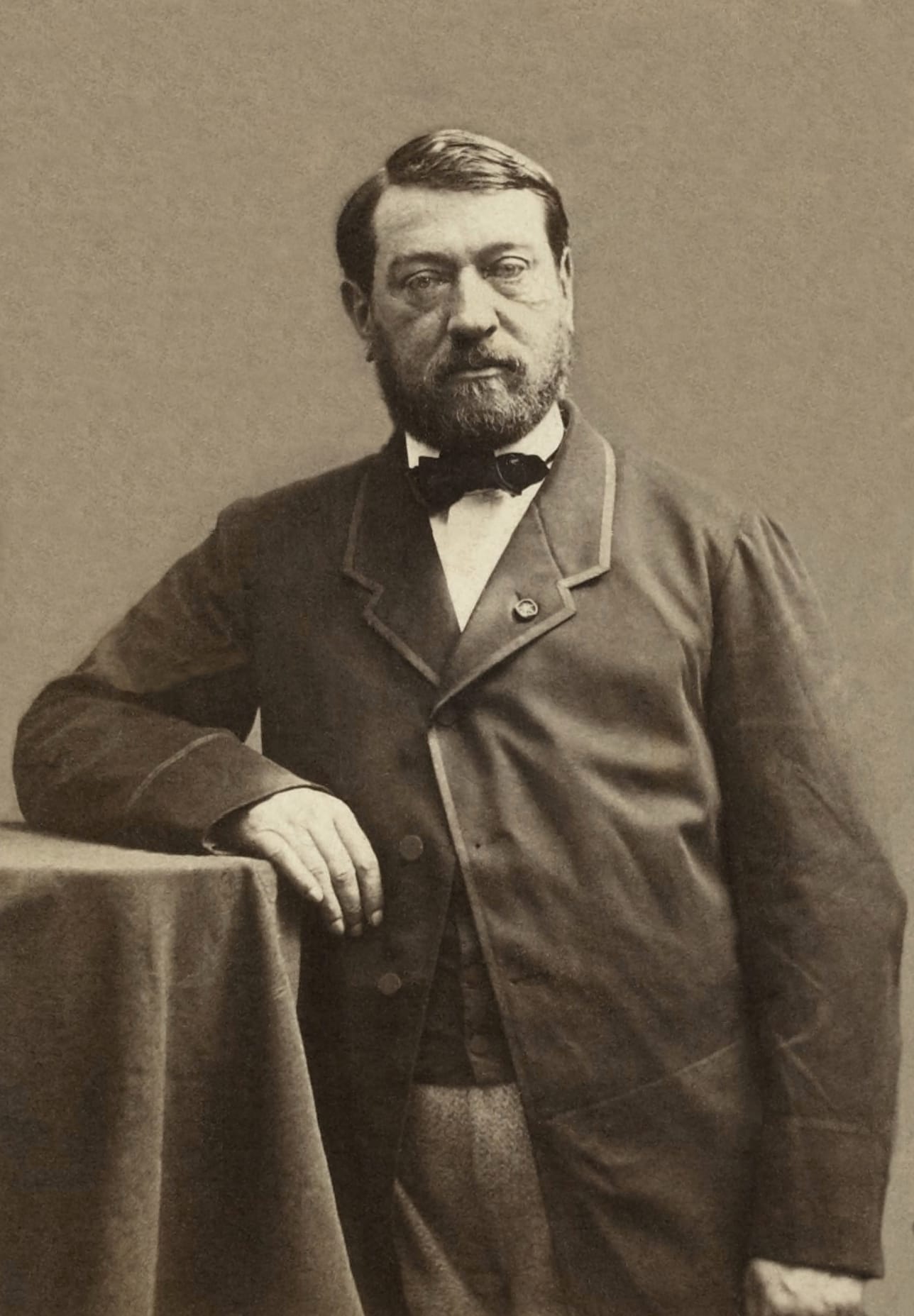
The release says Mariette first discovered these tombs between 1858 and 1860 and identified approximately 160 Old Kingdom tombs in all. His work, it says, focused on selected parts of them, particularly offering chapels, corridors and some burial chambers. Other architectural elements stayed unexcavated and inadequately documented.
Dr Hisham El-Leithy, Secretary-General of the Supreme Council of Antiquities, said in the release that the value of the Czech work lies in revisiting tombs whose excavation had remained incomplete since the nineteenth century. Modern scientific methods, he said, make it possible to study and document them and to reveal new details about funerary architecture, religious beliefs and the social lives of high-ranking officials.
That is my reading of the find: much of its weight comes from the gaps in the first dig. A chapel that the nineteenth-century excavation missed turned up once someone went back.
The burial chamber
The release says the burial chamber of Ptahshepses is reached through a descending passage from the eastern side. Inside, archaeologists found a limestone sarcophagus containing his remains. It says he held high-ranking positions under four Fifth Dynasty kings: Sahure, Neferirkare, Raneferef and Nyuserre.
The chamber had been looted in antiquity, the release says, and its jewellery and other valuable objects had disappeared. Remains of Ptahshepses' mummy survived, and a team of Egyptian anthropologists examined them. Their analysis indicated that he died at an age exceeding sixty years, consistent with the information recorded in inscriptions describing his life. The release calls this a remarkably advanced age by the standards of ancient Egypt.
Dr Mohamed Megahed, the mission's deputy director, noted that despite ancient tomb robberies that stripped away jewelry and precious artifacts, Ptahshepses' skeletal remains survived.
A princess, and a claim about nepotism
The release says that, according to surviving written sources, Ptahshepses was the first non-royal official to marry an Egyptian princess, Khamaat, daughter of King Userkaf, the founder of the Fifth Dynasty.
Bárta, in the release, said the team has uncovered "magnificent new monuments, including the tomb of Ptahshepses, which have provided an extraordinary amount of historically unique information". He added: "Although it may seem unlikely, our archaeological research over the past few years has produced entirely new evidence concerning the historical background of the Fifth Dynasty. This includes new insights into the early history of nepotism and lobbying in human civilisations, as well as innovations in the mummification process."
The release gives no further detail on what that new evidence is or how it was obtained.
The release says the mission continues to study and restore both tombs and to pursue further investigations in the necropolis.
Sources
Abu Dashish, A. (2026) 'Tourism Minister Inspects Saqqara Digs as Czech Mission Unearths Old Kingdom High Priests' Tombs', SEE News, 26 October 2026, available at: https://see.news/tourism-minister-inspects-saqqara-digs-as-czech-mission-unearths-old-kingdom-high-priests-tombs (Accessed: 31 October 2026).
Archaeology Magazine (2026) 'Old Kingdom Tombs Investigated in Saqqara', Archaeology Magazine, 28 October 2026, available at: https://archaeology.org/news/2026/10/28/old-kingdom-tombs-investigated-in-saqqara/ (Accessed: 31 October 2026).
Czech Institute of Egyptology, Faculty of Arts, Charles University (2026) 'Czech Archaeologists Rediscover the Tombs of Sabu and Ptahshepses at Saqqara', CEGU (publishing a press release of the Egyptian Ministry of Tourism and Antiquities), 27 October 2026, available at: https://cegu.ff.cuni.cz/en/czech-archaeologists-rediscover-the-tombs-of-sabu-and-ptahshepses-at-saqqara/ (Accessed: 31 October 2026).
Sela-Eitam, M. (2026) 'Ancient Egyptian official's tomb rediscovered in Saqqara with an untouched mummy', The Jerusalem Post, 31 October 2026, available at: https://www.jpost.com/archaeology/article-913349 (Accessed: 31 October 2026).
Picture credits
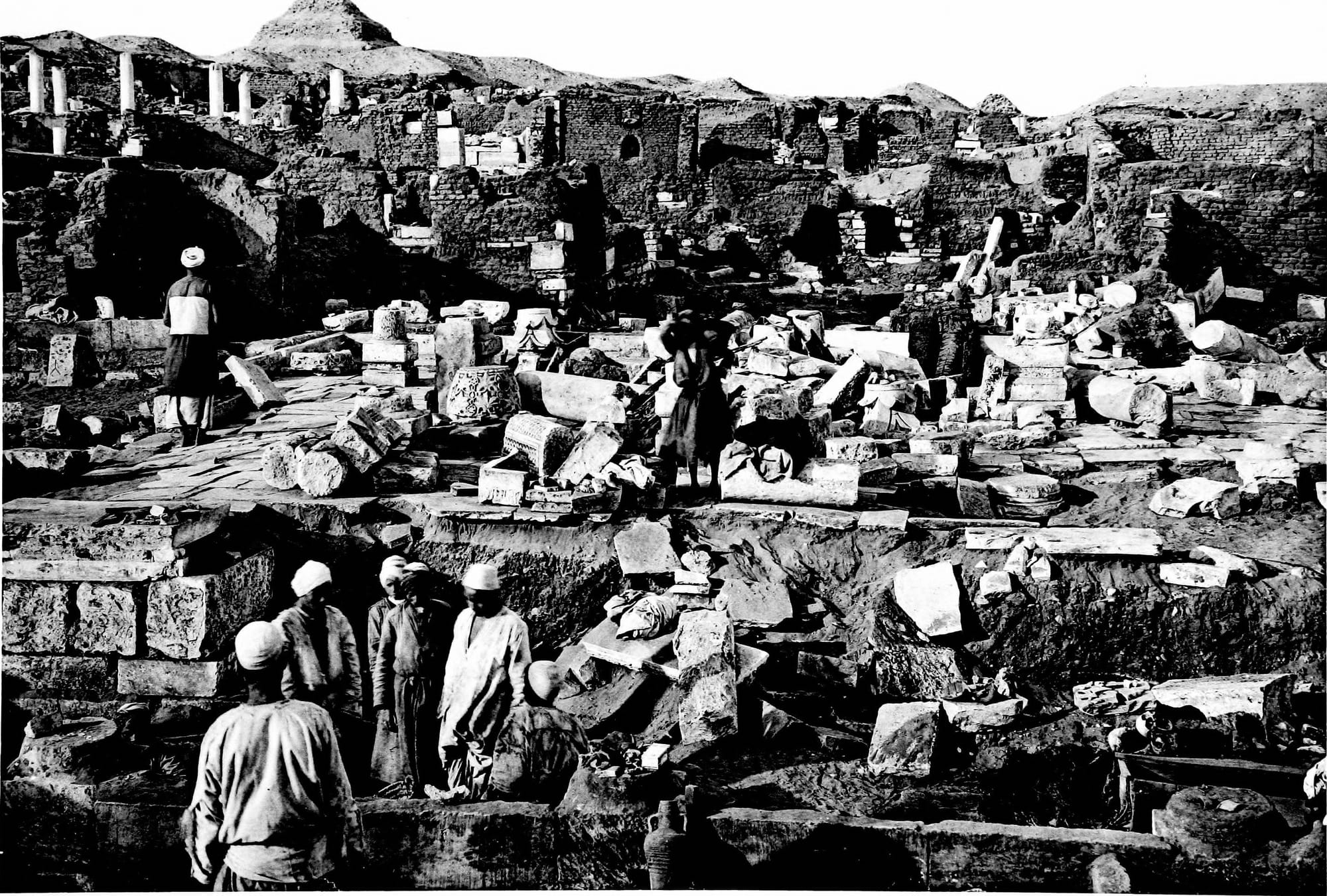
- Top picture: The Monastery of Apa Jeremias at Saqqara, from J.E. Quibell's Excavations of Saqqara (1912). It is not one of the tombs in this story. Image: Monastery of Apa Jeremias, Saqqara — J.E. Quibell, Excavations of Saqqara (1912) (source)
- Auguste Mariette, French Egyptologist and founder of the Egyptian Antiquities Service. Auguste Mariette — photograph by Nadar (source)
- Map: drawn from Natural Earth (public domain) and Wikidata.

