
The most frustrating part of the Tutankhamun tomb story isn't the mystery. It's the gate.
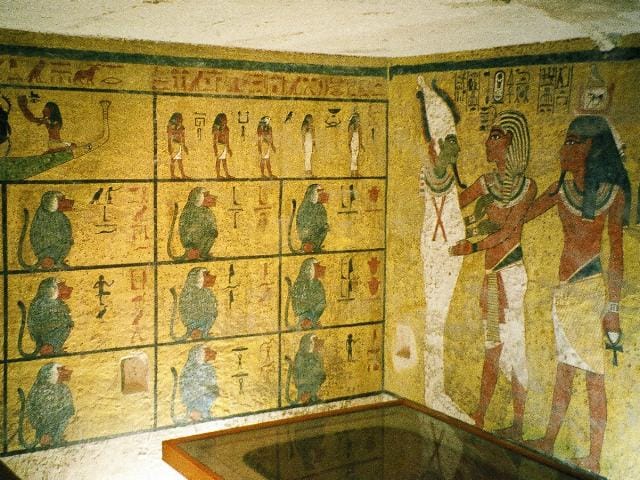
For a decade, the question has been the same: is there something behind the north wall of KV62's burial chamber? In 2015, Nicholas Reeves — an independent British Egyptologist who has worked extensively in the Valley of the Kings — pointed to lines, cracks, and altered paintings on that wall and argued it was a false wall, the kind ancient Egyptian tomb builders used to conceal further chambers. His proposal: KV62 was originally a much larger royal tomb, and when the young pharaoh died unexpectedly, the deeper sections were sealed off and the entrance modified for his burial.
Over the years, the answers have gone back and forth. Some researchers concluded that chambers were present; others found that the data revealed nothing, and anomalies in the surrounding ground were judged unrelated to the tomb. In 2018, a radar investigation led by the Polytechnic University of Turin (Politecnico di Torino) was reported at the time as conclusive proof that there were no hidden chambers. For many, that settled it: the wall was solid.
Now new gravity data suggests otherwise.
What the new survey actually shows
On 17 September 2026, Nature published a report on a new geophysical survey of KV62, conducted by Mamdouh Eldamaty — an archaeologist at Ain Shams University in Cairo and former antiquities minister of the Egyptian government — with colleagues at Egypt's National Research Institute of Astronomy and Geophysics, and analysed by George Ballard, a structural engineer and the founder and chairman of the GBG Group, an international geophysics consultancy. The full conclusions sit in Occasional Papers of the Amarna Royal Tombs Project, No. 8 (2026), a project publication series rather than a peer-reviewed journal article.
The team used two techniques. Ground-penetrating radar, conducted through the walls from inside the tomb, has a limited range. So they also ran a microgravity survey — described in the Nature report as the first use of gravitational techniques to probe the density of ground around the site. It is non-invasive, measuring density through tiny variations in Earth's gravitational field. Ballard drew on more than 1,200 readings across a 35-square-metre area.
Ballard's reading of the combined data: a 2-metre-wide corridor, densely packed with rubble, leading away from the burial chamber. He argues previous teams missed it because they were looking for a large void immediately behind the wall, not a narrow, debris-filled passage further out. The microgravity data also shows what could be artificial chambers — in his words, "structures with right angles, of low density — and those structures are interestingly parallel on their axes to the north wall."
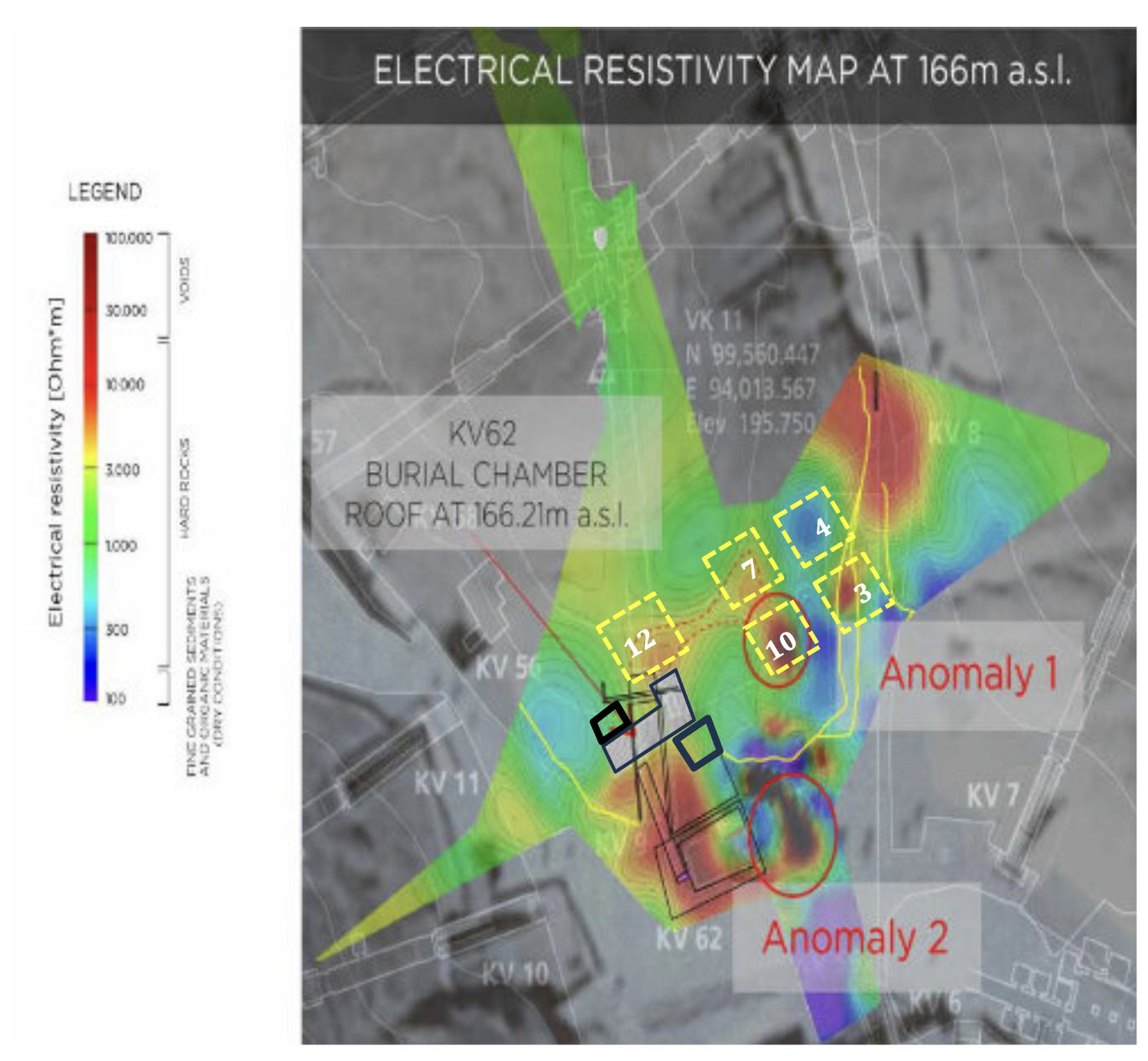
One feature, which Ballard calls "anomaly 7," is a mostly low-density zone hosting a roughly square, high-density area within it. He suggests it might be a chamber filled with objects, while admitting he is "looking at the very limits of detection." A further possible room lies immediately to the west of the burial chamber, though the signal there is complicated by the gravitational effect of another nearby tomb.
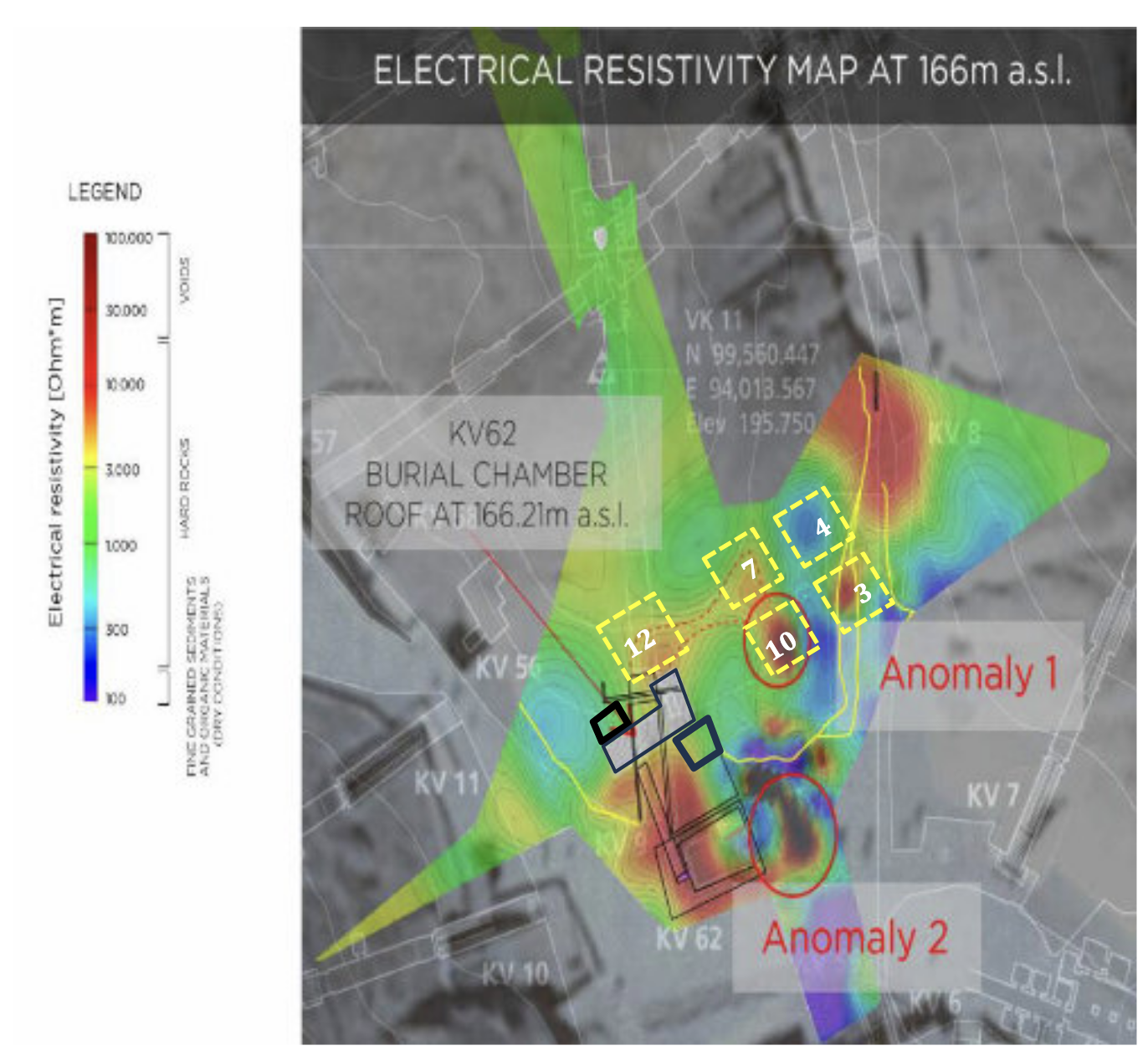
The 2017 electrical-resistivity tomography data (Fischanger et al., Journal of Cultural Heritage 36, 63–71, 2019) showed anomalies in similar locations. At the time, they were dismissed as unrelated to KV62.
Eldamaty's summary, in Nature's words: the data "strongly suggest that there is a 'hidden complex' of corridors and rooms that pre-dates the entombment of Tutankhamun." If confirmed, he adds, it "could 'rank among the most transformative archaeological discoveries of the modern era'."
The proposed chambers do not appear to link to any other entrances. If they exist, they have not been entered since ancient times.
The Nefertiti question
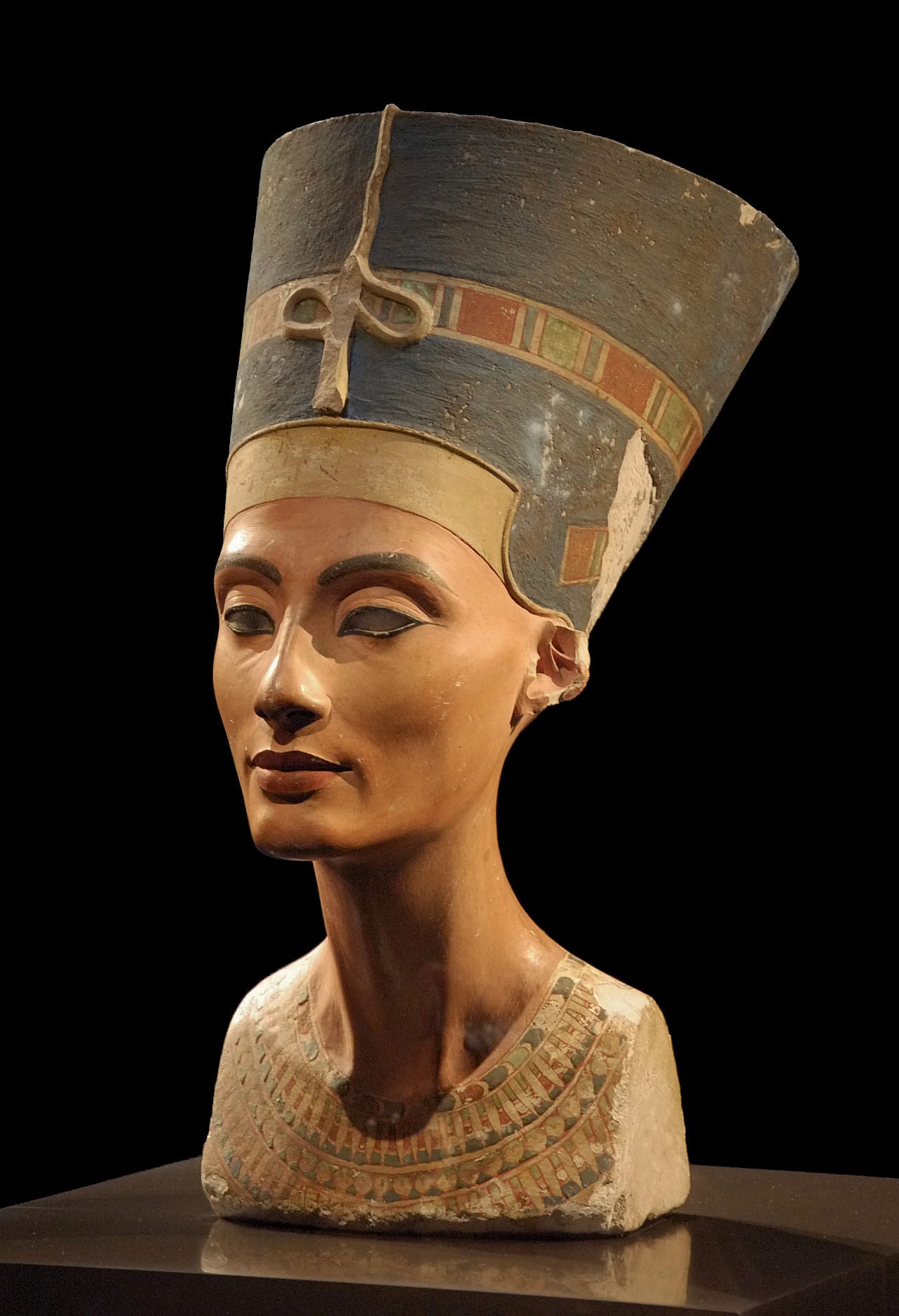
The tomb was built in the fourteenth century BC and discovered in 1922. It is, by the Nature report's own description, "unexpectedly small for a royal burial." Reeves' 2015 proposal included the possibility that the hidden chambers could hold the resting place of Tutankhamun's predecessor, Nefertiti. Many Egyptologists think she briefly ruled as a Pharaoh. Her tomb has never been found.
Ancient Origins, reporting on the same paper, notes that the authors "consider five to six chambers are possibly present, interconnected with passages filled with rubble in antiquity," a figure drawn from the IFLScience coverage of the study. The paper's full title — An Archaeo-Geophysical Review and Assessment of the Structure and Morphology of Tutankhamun's Tomb (KV 62) (The Burial of Nefertiti? IV) — makes the Nefertiti thread explicit, though the team's language throughout is hedged: "strongly suggest," "could be artificial chambers," "if they exist."
The sceptics, and the gate
The independent experts quoted in Nature are cautious. Christopher Gaffney, an archaeologist and GPR specialist at the University of Bradford, calls the report "fascinating" but says it "doesn't provide enough information to draw definitive conclusions." His exact words: "I'm feeling pretty ambivalent." Peter Styles, a geophysicist at Keele University, says the presence of chambers "looks plausible" from the microgravity data but wants more detail. Ballard confirms he does not yet have permission from the Egyptian authorities to release all of the data.
Zahi Hawass, a prominent Egyptologist and former antiquities minister, pushes back on the Nefertiti interpretation specifically. He told Arab News it is "highly unlikely" that Tutankhamun was buried in Nefertiti's tomb, and that KV62 was "more probable … originally a small tomb intended for Ay." His is a different architectural reading of the same small space, not a denial of the geophysical data.
The three positions — Reeves' 2015 larger-tomb hypothesis, Hawass' Ay-tomb reading, and Eldamaty's 2026 hidden-complex proposal — are related but distinct. None of them is settled.
And the next step is not a scientific one. The decision of whether to drill rests with Egypt's Supreme Council of Antiquities. If approved, careful drilling to deploy miniature tractors equipped with cameras could start in November, Ballard told Nature. The data is published. The interpretation is contested. The permission is bureaucratic.
That is the part that doesn't add up. The wall has been questioned for a decade. The gravity readings are in. The independent geophysicists say the signal is plausible. And the question of whether anyone actually looks is being held in a committee, not a laboratory.
The data doesn't prove Nefertiti is behind the wall. It doesn't prove anything is behind the wall. But it does strongly suggest the wall is not what it was long taken to be — and the people who get to decide whether that gets tested are not the people who took the readings.
Sources
Eldamaty, M., Abbas, A. M., Ballard, G. & Reeves, N. (2026) 'An Archaeo-Geophysical Review and Assessment of the Structure and Morphology of Tutankhamun's Tomb (KV 62) (The Burial of Nefertiti? IV)', Occasional Papers of the Amarna Royal Tombs Project, No. 8, available at: https://www.academia.edu/175580520/An_Archaeo_Geophysical_Review_and_Assessment_of_the_Structure_and_Morphology_of_Tutankhamuns_Tomb_KV_62_The_Burial_of_Nefertiti_IV_ (Accessed: 26 September 2026).
Francis, F. (2026) 'New scans revive hunt for Nefertiti's tomb behind Tutankhamun's burial chamber', Arab News, 23 September 2026, available at: https://www.arabnews.com/middle-east/new-scans-revive-hunt-for-nefertitis-tomb-behind-tutankhamuns-burial-chamber-3002850 (Accessed: 26 September 2026).
Fischanger, F. et al. (2019) 'Geophysical anomalies detected by electrical resistivity tomography in the area surrounding Tutankhamun's tomb', Journal of Cultural Heritage, 36, pp. 63–71, doi:10.1016/j.culher.2018.07.011 (Accessed: 27 September 2026).
Manners, G. (2026) 'New Evidence Points to Hidden Chambers Beyond Tutankhamun's Tomb', Ancient Origins, 20 September 2026, available at: https://www.ancient-origins.net/news-history-archaeology/hidden-chambers-beyond-tutankhamun-s-tomb-00103192 (Accessed: 26 September 2026).
Marchant, J. (2026) 'Exclusive: New evidence for hidden chambers beyond Tutankhamun's tomb', Nature, 657, pp. 861–862, 17 September 2026, doi:10.1038/d41586-026-02621-2, available at: https://www.nature.com/articles/d41586-026-02621-2 (Accessed: 26 September 2026).
Reeves, N. (2015) 'The Burial of Nefertiti?', Occasional Papers of the Amarna Royal Tombs Project, No. 1 (Accessed: 26 September 2026).
Romey, K. (2018) 'It's Official: Tut's Tomb Has No Hidden Chambers After All', National Geographic, 6 May 2018, available at: https://www.nationalgeographic.com/science/article/king-tut-tutankhamun-tomb-radar-results-science (Accessed: 27 September 2026).