
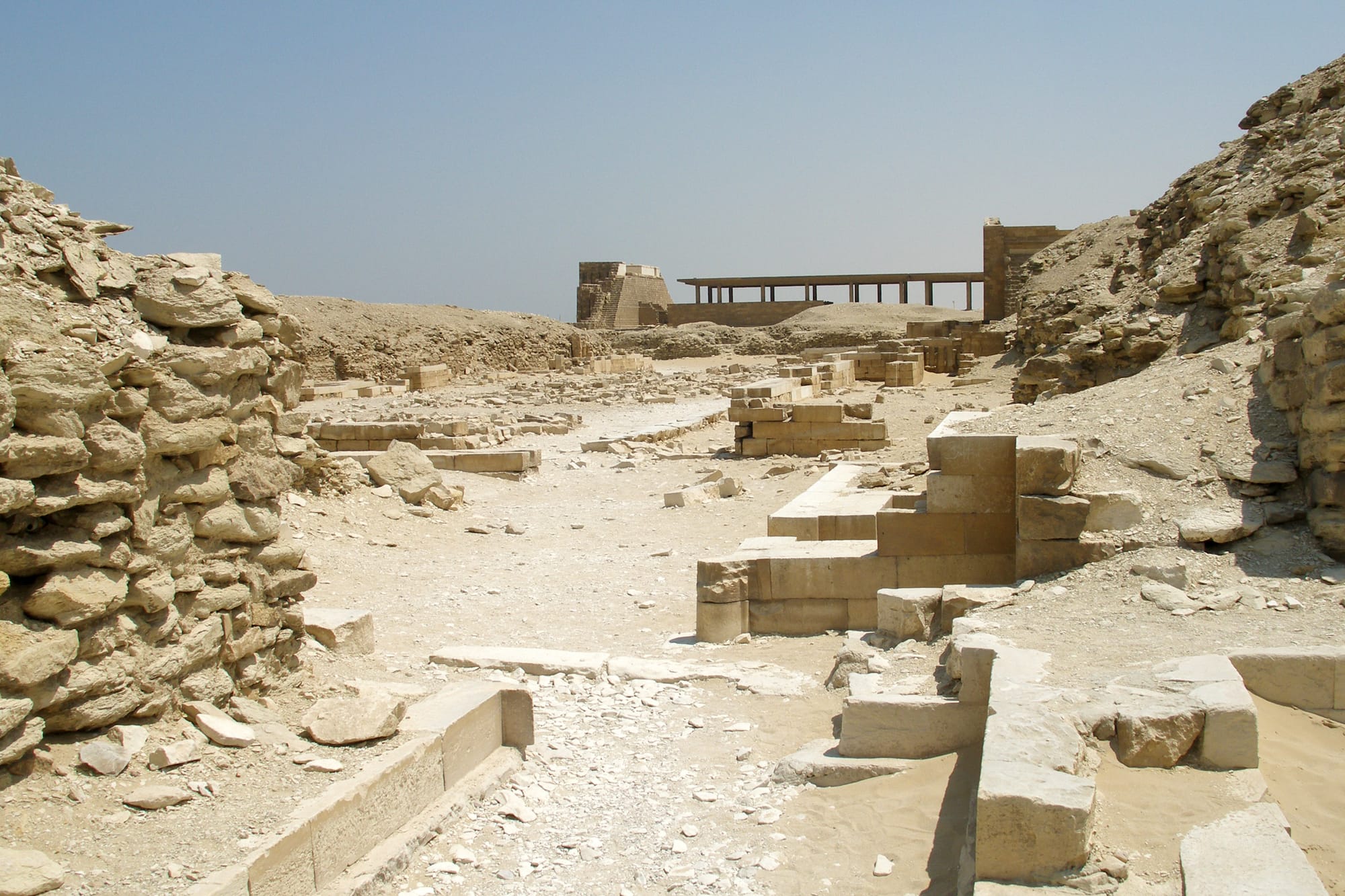
An Egyptian archaeological mission has unearthed the tomb of an Old Kingdom official named Weni in the necropolis of King Merenre at Saqqara, according to reports in the Daily Galaxy, the Voice of Emirates and Inkorr. The find that has drawn attention is a set of bronze instruments from the burial shaft that the antiquities authorities believe were used for medicine. Weni's inscriptions never call him a doctor.
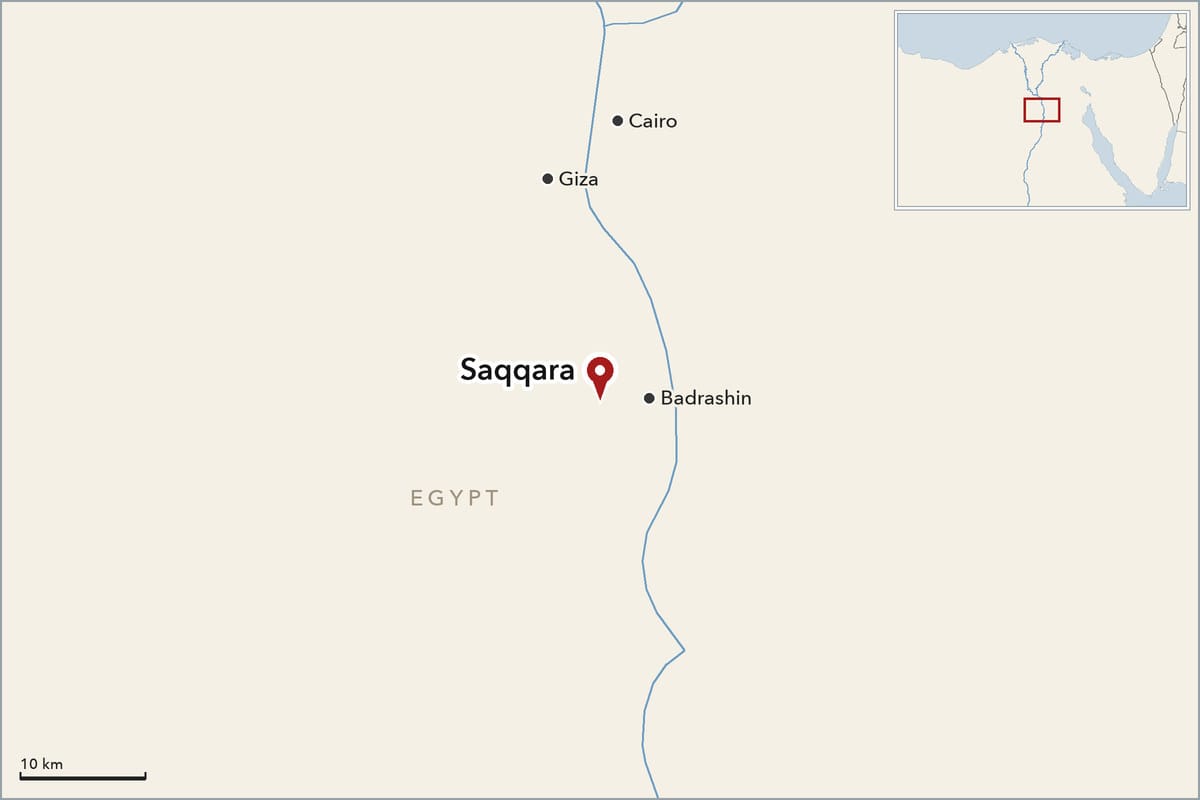
What was found
The Voice of Emirates reports that the tomb lies northwest of the pyramid of King Merenre and takes the form of a mud-brick funerary platform with several burial shafts. One shaft leads to Weni's burial chamber, whose inscriptions let researchers identify him and his offices. The Daily Galaxy describes the structure as a mastaba. It adds that Merenre was a Sixth Dynasty pharaoh who ruled around 2280 BC, and that Hisham el-Leithy, secretary-general of the Supreme Council of Antiquities, said the inscriptions are in relatively good condition.
Directly above the burial chamber, the mission found a vaulted room holding two small wooden statues. The Daily Galaxy says the team describes their pose as a rare devotional one. It notes that wooden figures are fragile and seldom survive in good condition. Inkorr, which relays a report from НВ — Техно, says the Ministry of Tourism and Antiquities described them as depicting a rare gesture of worship or reverence.
The Daily Galaxy also reports that Minister of Tourism and Antiquities Sherif Fathy visited the site on 26 October and went down the burial shaft himself.
The bronze tools
The bronze instruments were found inside the burial shaft and are believed to have been used for medical purposes. According to Mohamed Abdel-Badei, head of the Egyptian antiquities sector at the Supreme Council of Antiquities, they were likely used for medical purposes, and such objects are relatively rare in burials. The inscriptions include no medical title, and further study is planned to determine what the tools were used for and how they relate to the tomb's owner.
My view: a set of tools thought to be medical in the grave of a man who is never called a physician is exactly the kind of mismatch worth watching. It could mean the identification of the tools is off, or that Weni's role was broader than his listed titles. Nobody can settle that until the study the mission has announced is done.
A title that changes with the translator
Weni's titles include mayor, sem priest, treasurer of the northern house, sole companion, and lord of the city of El-Kab. He also held a court title that has been rendered as "director of every kilt", "Director of all Royal Estates" and "overseer of royal expeditions".
The mission also found a false door belonging to a woman who held the title of priestess of Hathor.
What the skeleton shows
A preliminary study of Weni's skeletal remains, reported by both the Daily Galaxy and the Voice of Emirates, indicates he died after the age of 50. He suffered advanced disease of the teeth and surrounding tissues, and his bones bear marks consistent with repeated physical strain.
Not the famous Weni
The Daily Galaxy points out that the name will be familiar. Weni the Elder, an official who served under three kings including Merenre, left the longest autobiographical inscription known from the Old Kingdom. The Daily Galaxy says he was buried at Abydos, where his tomb was located in 1999 by a team led by Janet Richards of the University of Michigan. It also says the ministry's statement presents the Saqqara Weni as a separate official, and that the name was common at the time.
A cemetery that keeps producing officials
The Daily Galaxy says the cemetery around Merenre's pyramid has been yielding Old Kingdom officials for several years. It reports that in 2022 the same area produced five tombs, among them that of Henu, a royal sealer whose decorated burial chamber was found looted. Citing Ahram Online, it adds that the chamber is now on display in the Grand Egyptian Museum.
The Daily Galaxy says the mission is continuing architectural, linguistic and art-historical studies of the finds, along with work on how the different parts of the mastaba were used across its phases.
Sources
Amiri, A. (2026) 'Archaeologists Find a 4,300-Year-Old Egyptian Official Buried With Bronze Medical Tools at Saqqara, but His Tomb Never Calls Him a Doctor', The Daily Galaxy, 27 October 2026, available at: https://dailygalaxy.com/2026/10/egypt-weni-tomb-bronze-medical-tools/ (Accessed: 27 October 2026).
Elsheikh, M. (2026) 'Discovery of the tomb of a prominent official from the Old Kingdom era in Saqqara… Rare inscriptions reveal the secrets of the holder of the titles of "Mayor" and "Lord of the City of Elkab"', Voice of Emirates, last updated 27 October 2026, available at: https://www.voiceofemirates.com/en/lifestyle/2026/10/27/discovery-of-the-tomb-of-a-prominent-official-from-the-old-kingdom-era-in-saqqara-rare-inscriptions-reveal-the-secrets-of-the-holder-of-the-titles-of-mayor-and-lord-of-the-city-of-elkab/ (Accessed: 27 October 2026).
Tkach, A. (2026) 'Bronze Tools and Wooden Prayer Figurines Unearthed Near Official Veni's Tomb in Saqqara', Inkorr, 27 October 2026, available at: https://inkorr.com/en/arheologi-v-sakkari-znajsli-derevani-figurki-v-pozi-molitvi-j-bronzovi-instrumenti-bila-grobnici-cinovnika-veni-352384 (Accessed: 27 October 2026).
Picture credits
- Top picture. © Vyacheslav Argenberg, CC BY 4.0 (source)
- Map: drawn from Natural Earth (public domain) and Wikidata.
