
The rule for this show is simple. AI generation is for dramatised reenactment only. Anything presented as evidence — the disputed inscription, a primary document, a "here is the paper" beat — has to be real, sourced material. On an episode that is entirely about whether a piece of evidence was faked, that is not a stylistic choice. It is the argument.
So most of the work on Episode 1 has been sourcing, not writing. Here is where that stands.
The cedar plank. The University of Aberdeen has given formal permission to use its photographs of the Dixon cedar fragments — the scrap of wood pulled from inside the Great Pyramid in 1872, lost in a museum for over a century, radiocarbon dated in 2020. Credit goes to them on screen, and they get a heads-up when the episode airs. It is the one piece of physically tested evidence anywhere near this story, and it is a real photograph of the real object.
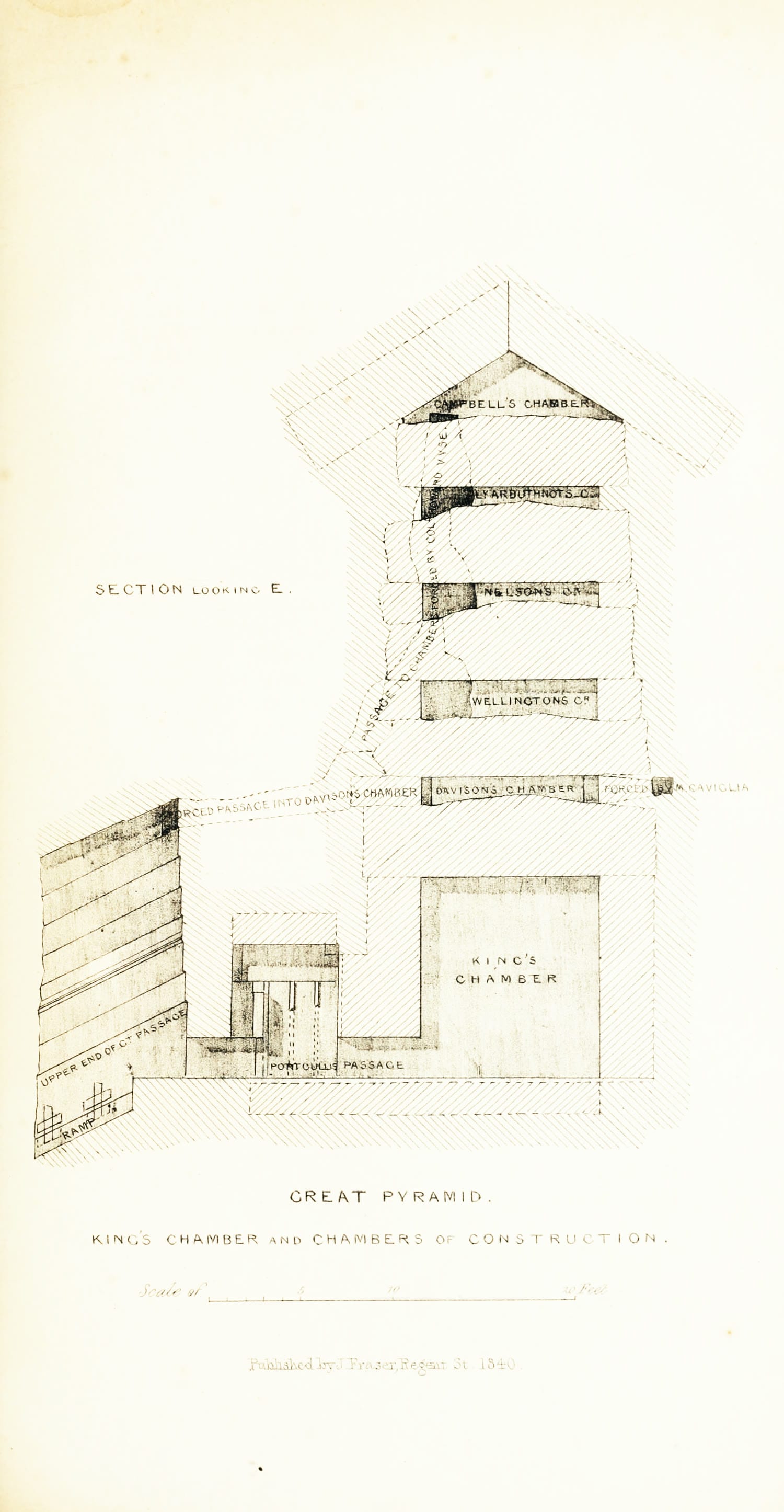
Vyse's own book. Operations Carried on at the Pyramids of Gizeh in 1837 is fully digitised. We pulled the section plate showing the four chambers Vyse blasted open, stacked above the King's Chamber, his forced passage marked in dashes.
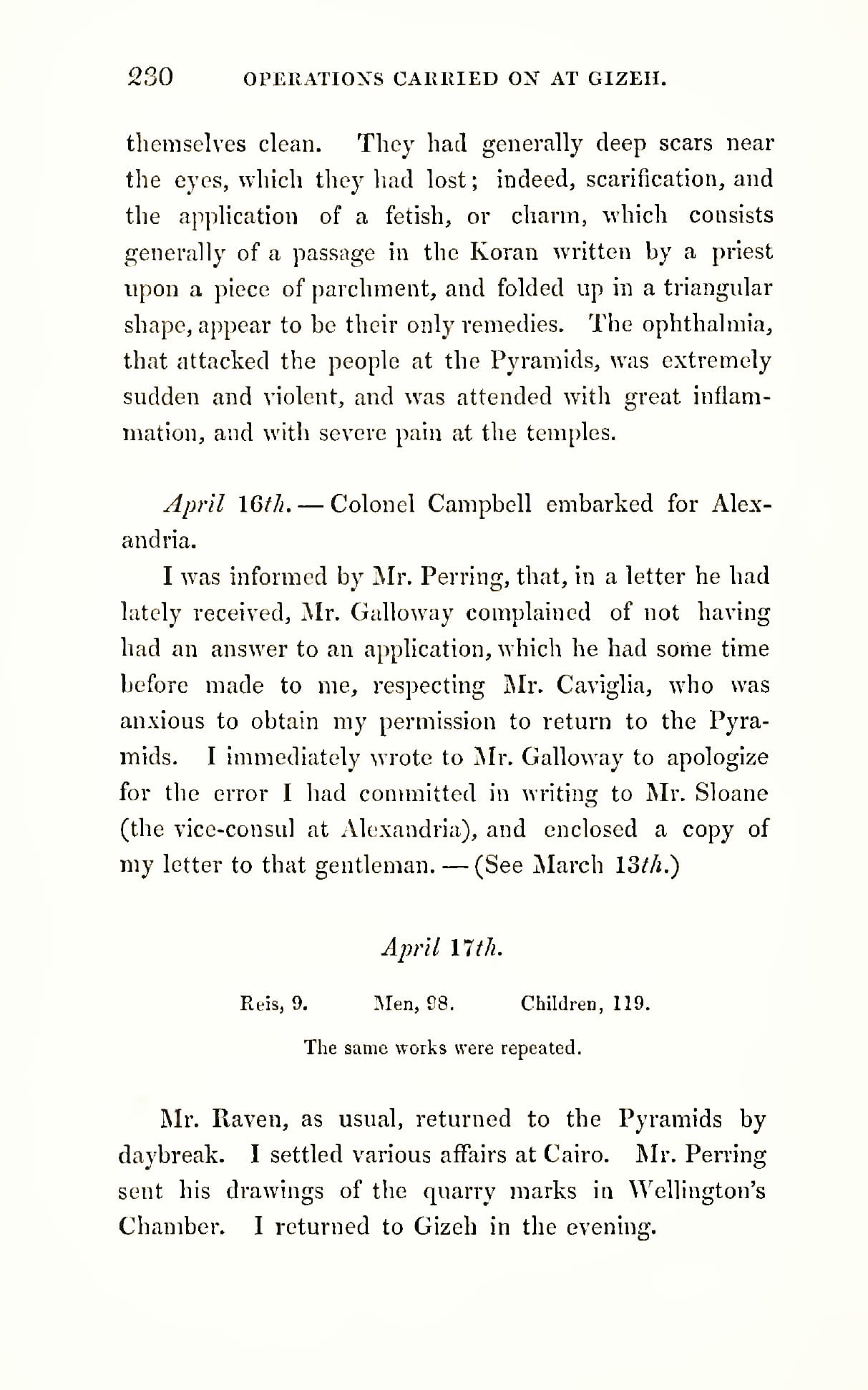
We also found three pages of his printed day-by-day diary by searching the full text: the 17 April entry where Perring sends over his drawings of the quarry marks, the 2 May "red quarry marks were…" entry, and a woodcut of the Suphis cartouche printed on the page. His own words, in period type. Those go on screen as they are.
The second Khufu. Léon de Laborde drew a rock relief at Wadi Maghara in the Sinai in 1828 and published it in 1830 — a cartouche reading "Khnumkhufui, the great god," nine years before Vyse picked up a chisel. We found the plate on Gallica and cross-checked it against Gardiner, Peet and Černý's Inscriptions of Sinai, which catalogues the same monument as Khufu's. The original relief is now destroyed. Laborde's drawing is one of the last records of it, and it does real work in the episode.
The fact-check. Every checkable claim in the script went against primary sources. It caught things. Vyse was a colonel in 1837, not a major-general — that rank came in 1846. The "original entrance" cleared in July 1837 was the entrance to Menkaure's pyramid, not the Great Pyramid's, which had been known since antiquity. And a claim that Vyse's notes record him buying red ochre in Cairo turned out not to appear in any source we could find, so it is gone.
Every date, quote and chamber in the script now traces to something specific. On a show that accuses a field of getting careless with its evidence, that part is not optional.
More soon.